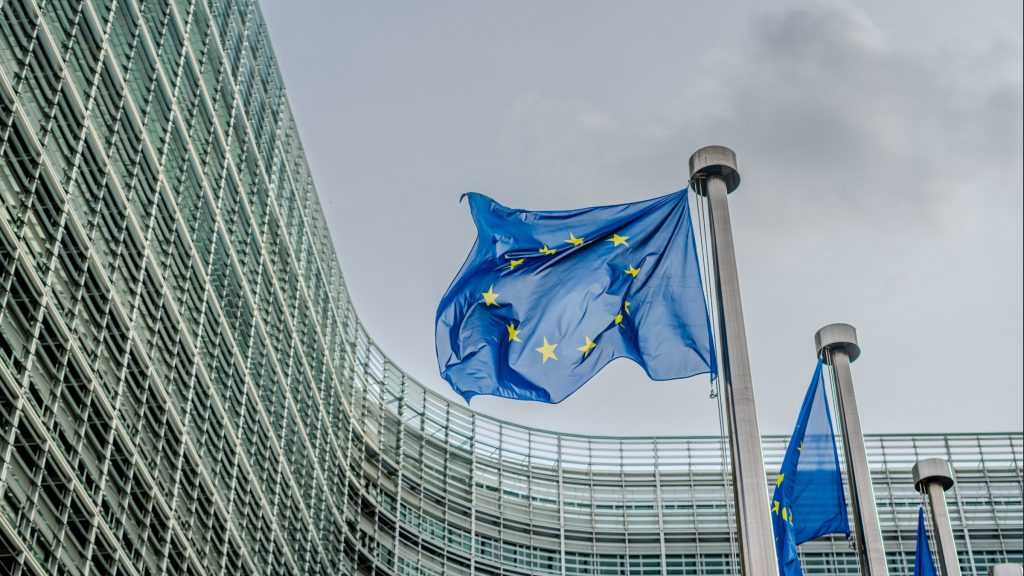
The European Union’s (EU) Digital Markets Act (DMA) was supposed to be the instrument that finally made Silicon Valley’s European dominance open to fair competition. Three years into its existence, the gatekeepers – Big Tech companies in Europe – the Act was designed to constrain are bigger, more entrenched and profitable in the EU markets than they were when the legislation passed.
Alphabet, Meta, Apple, Amazon, and Microsoft. As well as ByteDance, are designed as gatekeepers under the DMA’s taxonomy. These Big Tech companies in Europe have managed to defer mandatory messaging interoperability – legal requirement that forces them to open up their messaging networks so different apps can communicate – and unbundling data obligations via a compliance extension process.
Back in April 2026, the European Commission delayed plans to make social media platforms interoperable across the EU. In doing so, it gave the godfather of social media, Meta Platforms more time to protect data, and advertising revenue, while smaller European apps remain locked out.
Any EU Big Tech regulation and fines alone don’t create competition, as smaller platforms need access, visibility, and the ability to connect with users inside dominant networks. Without that, privacy-friendly services remain in niche products while Silicon Valley keeps the scale it needs to attract advertisers and control online behavior.
More than 450 million European citizens’ data remain prisoners inside Big Tech companies’ proprietary platform silos that the DMA was architected to open. It is, by definition, the raison d’être of the EU DMA.
The EU Big Tech antitrust scrutiny allows users to leave a platform, but they often lose access to friends, communities, customers, and audiences. Without interoperability, people remain tied to Big Tech companies in Europe, which in return, allows the US tech giants to keep advertising money, user data, and attention concentrated in the same hands.
European user data and Big Tech giants’ advertising revenue will continue to migrate to US-based platform. The commercial consequences flow from the EU regulators’ failure to strictly enforce the DMA for almost three years.
European Regulators Crack Down on Big Tech
The DMA was designed to open Europe’s digital economy by forcing the gatekeepers to give rivals fairer access. Europe Big Tech regulation has introduced browser choice screens, outside app stores, third-party payments, and cross platform messaging.
Yet, despite Brussels drafting the DMA legislation with genuine structural ambition, it has now discovered that that very same structural ambition and its enforcement in American tech giants is not the same thing.
And there’s also the fact that Silicon Valley’s ruthless legal teams understood the difference between the legislative ink was dry.
A Latvian start-up called BirdyChat can now let its users send messages to people on WhatsApp, demonstrating how interoperability can give smaller services access to markets controlled by larger platforms. Yet the European Commission stopped short of extending the same idea to social networks, such as Meta’s Facebook, Instagram, and ByteDance’s TikTok.
Delaying interoperability is the opposite to Big Tech companies in Europe while limiting competition and user choice.
The market share number of Big Tech companies in Europe is DMA’s enforcement record, or lack of, rendered in commercial consequence for the Europeans.
Meta retains control of more than 82% of Europe’s instant messaging traffic across WhatsApp and Messenger. Google’s parent company, Alphabet, commands upward of 91% of the regional search advertising market.
The figures, it’s worth noting, did not come to existence despite the DMA, but were consolidated during it, in the small window between legislative passage and the enforcement that has not meaningfully arrived.
The EU DMA’s fine structure of up to 10% of the Big Tech giants’ global revenue for initial violations, and 20% for repeat offenses, has been used by Silicon Valley as a negotiating parameter, than a deterrent.
Big Tech gatekeepers treated the DMA’s compliance timelines as deadlines that can be extended rather than deadlines that will impose scrutinizing consequence on Silicon Valley’s giants.
The Commission said demand from users and businesses was unclear and argued that social network interoperability remains technically very difficult. But demand is hard to measure when people have never been given a real chance to use smaller platforms without losing their existing contacts.
Interoperability could allow someone to choose a privacy focused European app while still communicating with friends who remain on Facebook or TikTok. Europe Big Tech regulation could help independent developers compete without first building networks of hundreds of millions of users.
By delaying action, Brussels protects the network effect that shields Big Tech, leading to European regulators crack down on Big Tech. Meta can keep users inside its services, continue collecting behavioral data, and protect the advertising system built around that information. Smaller European apps, meanwhile, must persuade people to abandon their communities before switching.
With Europe Big Tech regulation it’s also an economic advantage. Advertising follows users, and users remain where their social connections already exist. If the Commission waits, Europe’s digital market may stay open in law but closed in practice.
Agustín Reyna of the European Consumer Organization described the Big Tech companies in Europe enforcement as a slow exchange between regulators and gatekeepers.
“There is a ping-pong between the Commission and the gatekeepers. Many of these companies are making small changes and then going back to the Commission to say, ‘Do you like this?’ And the Commission will tell them, ‘No, this is not enough.’ This is simply delaying much-needed changes,” he said.
Privacy Rights Lose Ground
The European Parliament recently extended rules allowing technology companies to voluntarily scan private texts, emails, and social media messages for child sexual abuse material.
More lawmakers voted against the measure than supported it, but opponents failed to reach the absolute majority needed to block it. Meta, Google, and Microsoft can retain the legal right to scan messages until 2028, although end-to-end encrypted services, such as WhatsApp and Signal remain exempt.
“We cannot go to the summer recess knowing that our children are not protected,” European People’s Party vice-chair, Tomas Tobé, told lawmakers. Supporters say scanning helps identify abuse and protect children.
“They could, if they want to, read every message you write, every email you send, every picture you share,” said Simeon de Brouwer of European Digital Rights, warning that the system gives private companies too much control over confidential communication.
Together, both decisions expose a contradiction in Europe’s digital policy. Brussels says it wants more competition, stronger rights, and digital sovereignty, yet its decisions can still leave the biggest American platforms with more power over European users.
Meta already faces scrutiny over its “consent-or-pay” advertising model, which asks users to accept tracking or pay for greater privacy. The Commission fined Meta $228.7 million (€200 million) in 2025, arguing that the model did not offer a genuine alternative, and the company appealed.
When the EU imposes new regulations on Big Tech companies, it keeps users behind their gates, keeps advertising money flowing upward, and leaves Europe’s smaller apps fighting for space in a market that remains tilted.
Inside Telecom provides you with an extensive list of content covering all aspects of the tech industry. Keep an eye on our Tech sections to stay informed and up-to-date with our daily articles.
