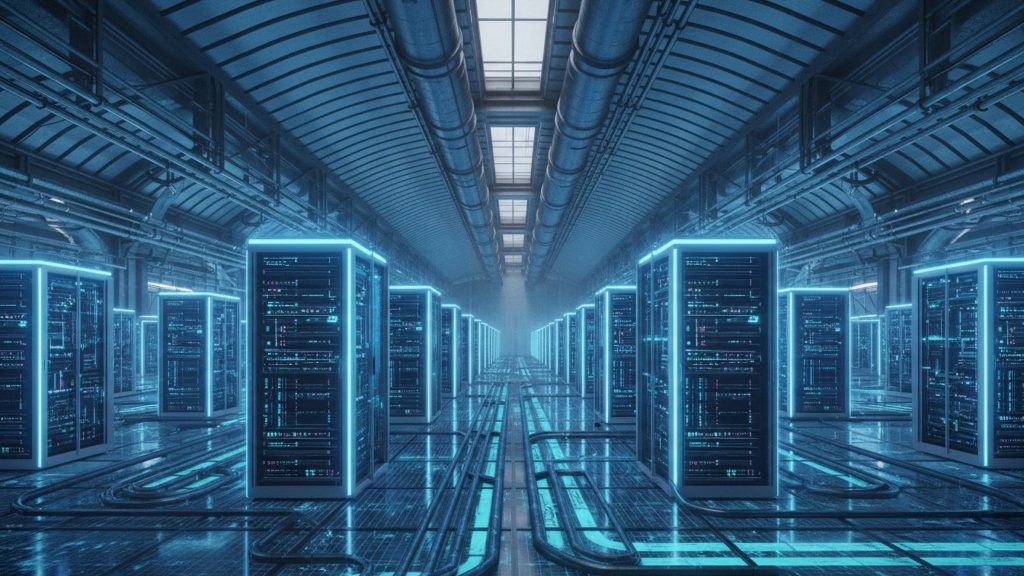
Meta is taking its AI infrastructure race to Alberta with a $9.1 billion data center Canada project, but the move is landing as water and power concerns around massive computing sites grow across North America.
The Facebook and Instagram parent announced on July 8 that it will build its first Canadian data center in Sturgeon County, outside Edmonton. The Meta data center Canada project, its 33rd globally, is designed for AI workloads and will support the company’s core platforms, smart wearables, and wider push into AI.
AI Demand Meets Alberta Power
The project represents more than US $9.2 billion, Canadian dollar (CAD) $13 billion in investment and could employ about 3,000 construction workers at peak, with more than 300 permanent operational jobs once complete. For Alberta, the Canada Meta investment is both an economic win and a test of whether the province can turn its energy base into a magnet for AI computing.
Provincial officials have spent years trying to attract large technology investments, especially as global demand for data center Canada rises sharply.
The data center Meta is building also arrives as governments compete to host the infrastructure behind next-generation AI systems.
Alberta Technology and Innovation Minister Nate Glubish said the project shows the province’s ambitions are moving from pitch to reality. “This is the first of its kind, the first of its size, the first of its scale, but it won’t be the last,” Glubish said.
Meta said it will fully fund new generation and grid infrastructure, arguing that consumers will not carry the cost of the data center’s energy needs. The Canada Meta project will be linked to the Greenlight Electricity Centre, a natural gas-fired power plant in Sturgeon County backed by Pembina Pipeline, Morgan Stanley Infrastructure Partners, and Kineticor Asset Management.
The power plant is expected to begin operating in the second half of 2030. Until then, Capital Power will provide 250 megawatts from its existing natural gas-fired fleet. Pembina has said the data center Canada project could require about 150 million cubic feet of natural gas per day, making it a major new demand source for Western Canadian gas producers.
Water Claims Face Tougher Scrutiny
Meta has tried to limit environmental criticism by stressing that the Alberta data center will use a closed-loop, liquid-cooled system with dry cooling. The company said the Meta data center Canada site will have no operational water use for cooling, limiting water use to domestic needs, fire safety, and equipment maintenance.
That claim matters because AI data centers are increasingly facing public pushbacks over electricity use, water demand, and pressure on municipal systems. The AI data center debate is no longer only about computing power; it is also about whether local grids, water networks, and public oversight can keep pace.
Meta says the Alberta facility’s electricity use will be matched with 100% clean and renewable energy, but environmental groups have questioned why such a large AI data center Canada project is being built in a province whose grid remains heavily tied to natural gas.
Greenpeace Canada’s Keith Stewart criticized the plan, saying, “We need a moratorium on mega-data centers until we have legislated environmental and human rights protections on AI.”
The water issue is not theoretical. In Cheyenne, Wyoming, local utilities suspended wastewater discharges from data center fill-and-flush and closed-loop cooling operations after tracing Cupriavidus gilardii, a rare metal-resistant bacterium, to Goat Systems LLC, a contractor used for Meta’s Cheyenne campus.
The Cheyenne Board of Public Utilities said the discharge interfered with two water reclamation plants and forced the reuse system offline for months of cleanup. The board revoked the contractor’s discharge privileges in March, while a wider suspension now covers data centers connected to city services.
The Wyoming case shows why how to stop water contamination is becoming a serious question for the data center industry. Closed-loop systems can still create risks during construction and commissioning, when water is flushed through cooling pipes before the system is sealed.
For Meta, Alberta offers scale, power, and political support. But the data center Meta plans in Canada will be judged not only by investment numbers, but also by its effect on local infrastructure and environmental trust.
As the Canada Meta project moves ahead, the wider Canadian Metastory will depend on how well technology companies manage energy demand, water safety, and public accountability.
That data Canada story will create balance will define how far AI infrastructure can expand without backlash.
Inside Telecom provides you with an extensive list of content covering all aspects of the tech industry. Keep an eye on our Intelligent Tech sections to stay informed and up-to-date with our daily articles.
