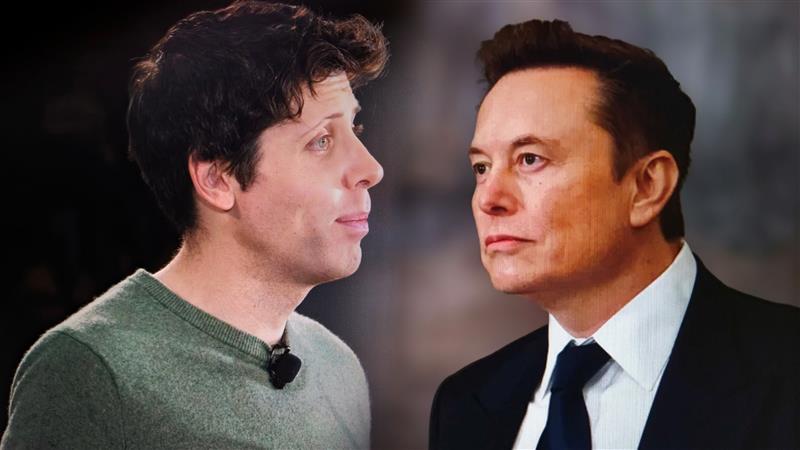
Now that the trial in Oakland has started, the rivalry between OpenAI and Elon Musk is one of those defining moments for AI that has everyone wondering whether corporate governance will play any role in determining Artificial General Intelligence’s (AGI) future throughout the Elon Musk vs Sam Altman court case.
The result may change the course of the most advanced AI research in the world. Besides the outcome, the case will be a point where an examination of how the initial promise of tech companies fits into their massive commercial expansion is required.
The Nonprofit Mission
The Elon Musk vs Sam Altman lawsuit centers on the company’s formative years and the original vision of the founders. Musk alleges he was deceived into providing approximately $38 million to $44 million in seed funding under the strict condition that the organization would operate as a nonprofit, ensuring that AGI development would be unconstrained by the need for financial return.
This OpenAI lawsuit explores whether those initial funds were intended as charitable trust for humanity or merely a foundation for commercial ambition.
“This was all hot-air philanthropy – the hook for Altman’s long con,” in a sarcastic assessment of the company’s transition, the complaint filed by Musk asserts. “The perfidy and deceit are of Shakespearean proportions.”
Based on court documents, Musk’s lawyers maintain that the transition from a nonprofit to an OpenAI for-profit organization totals a violation of the initial purpose that valued safety over bottom lines.
Technical Risks and Court Supervision
At the center of this Elon Musk vs Sam Altman clash lies a conflict about technological acceleration. OpenAI has evolved into a massive entity, deeply integrated with Microsoft’s cloud infrastructure -with Microsoft currently holding a 27% stake.
If the court decides this transition violated a charitable trust, the result of the Musk Altman trial could force the company to unwind its commercial structures.
If OpenAI loses, strict judicial oversight or forced restructuring could cripple its research and development velocity, potentially stalling AGI progress while triggering an existential industry shift toward transparent, regulated AI architectures.
Why is Elon Musk suing OpenAI? Primarily to challenge the for-profit pivot that he argues masks a departure from safety-first development. The legal drama between Musk and Altman risks ruining the path on which today’s digital architecture runs.
Industry analysts highlight how this case has brought the need for AI accountability frameworks into the national discourse. Yet, regardless of the verdict, the scrutiny placed on internal communications – found in Greg Brockman’s recently unsealed diaries – has already forced a wider industry discussion regarding AI model transparency.
Regarding the ongoing tension, Sam Altman recently remarked on the Core Memory podcast that he’s at this point is if he decides to drop the case right before trial, and the AI company doesn’t get to defend itself.
The outcome of this Elon Musk vs Sam Altman legal battle remains uncertain, but the stakes for the entire sector are clear. OpenAI for-profit operations was forced by the company and could face years of bureaucratic stagnation, effectively delaying its competitive edge against global rivals.
The Elon Musk vs Sam Altman saga will hold repercussions on the future of AGI. It’s no longer just a question of code, but a matter of who ultimately controls the keys to the empire. Therefore, the OpenAI lawsuit could forge the path toward super-intelligence becoming entangled with the complexities of law and governance.
Inside Telecom provides you with an extensive list of content covering all aspects of the tech industry. Keep an eye on our Tech sections to stay informed and up-to-date with our daily articles.