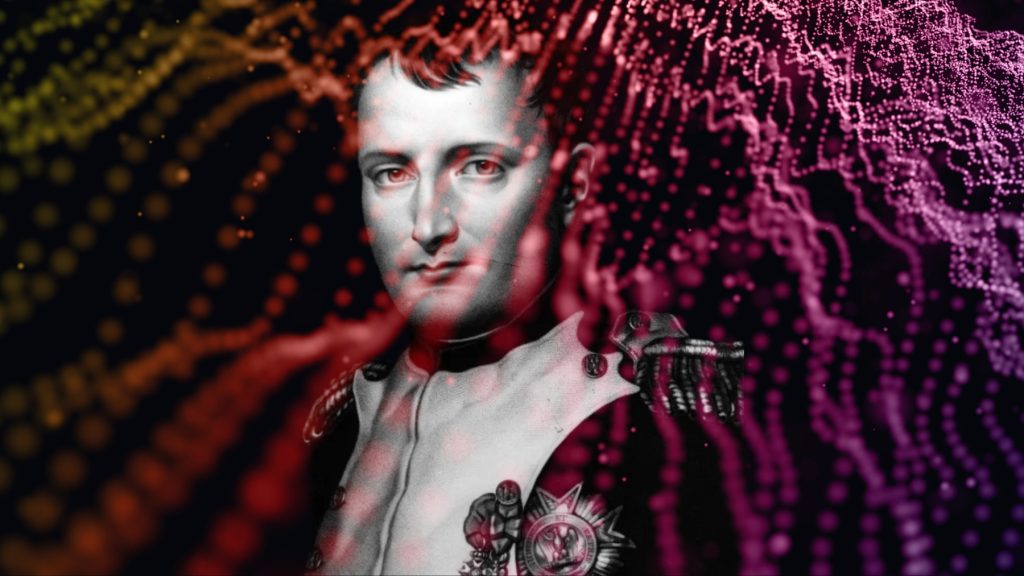
An engineer says OpenAI’s GPT-6 Astra model broke the 217-yeasr old Napoleonic military cyber in no more than six hours. Separately, French researchers processed 32,763 medieval manuscripts in four months while deliberately excluding large language models (LLM), because those systems tend to invent plausible words during their manuscript AI analysis.
The two projects demonstrate that manuscript AI analysis is re-examining historic research, but different tasks call for very different tools.
What the AI Cypher Decoded
A manuscript AI tool helped cybersecurity engineer Carter Church, at cybersecurity company, Sentinel One, revealed that GPT-6 Astra deciphered an encrypted 1809 military briefing sent to French General Auguste de Marmont.
The 217-year-old Napoleonic military message was not written by Napoleon Bonaparte.
The document originated at the headquarters of Eugène de Beauharnais, Viceroy of Italy, and was forwarded by Marmont on Napoleon’s orders after he instructed on March 16, 1809, that the message be written in cipher.
Church re-dated the document to about two weeks before Austria launched its offensive. At the time, much of the French army was tied down in Spain, and Marmont, commanding in Dalmatia, risked being isolated if Austria attacked. The text revealed Bavarian, Polish and French forces’ positions as Europe moved closer to war with Austria.
The AI cyber tool used image transcription, code analysis, and historical cross checking to reconstruct an encrypted troop briefing in roughly six hours
Several researchers had tried over the decades to reconstruct its content, but none had published a full decipherment, according to Euronews.
AI manuscript analysis is moving beyond modern documents and into historical archives that have resisted researchers for generations. European research teams are also developing specialized systems capable of processing thousands of old manuscripts far faster than traditional manual transcription.
AI Broke Napoleon Bonaparte’s 217-Year-Old Military Cipher
According to Church, OpenAI’s GPT-6 Astra model processed the historical document from beginning to end. The model worked through the whole task itself and acted as an AI image to text transcriber, examining the image before separating rows and recognizing handwritten symbols.
The OpenAI model’s decipher technology transcribed the scanned plate, which measures and cuts “1,202 by 1,836 plate into rows, read the signs, decided which of 175 hand–drawn marks were the same sign written twice, and only then began breaking the cypher,” wrote Church.
The process showed how an AI cypher system can move from visual recognition to cryptographic reasoning.
The model then analyzed the homophonic substitution system, wrote code, and compared its findings with historical records. That combination turned the manuscript AI process into more than simple optical character recognition.
Reliability of OpenAI Astro’s Napoleon Message Decipher
On September 18, Church published the full research on his social media page, including the transcription, cipher tables, and scripts that allow others to reproduce the result.
The Sentinel One engineer said Satoshi Tomokiyo, the Tokyo-based researcher who maintains the Cryptiana archive, reviews the solution and marked the manuscript decoded using AI entry as solved.
It’s worth noting that the sources reviewed do not report peer review in an academic journal.
Church’s work is an example of an AI manuscript reader helping researchers examine records that were previously difficult to interpret.
“The Russians are marching against Austria, and the army [of] Friuli today numbers eighty thousand men,” the document reads, showing the value of AI manuscript tools in recovering military information.
The combination of contextual evidence and deciphering technology helped confirm when the message was produced.
France Use AI to Process Medieval Manuscripts
Researchers are increasingly using manuscript AI to process historical collections that would otherwise demand years of specialized human work.
French researchers in , the national computer-science institute, together with philologists, deliberately kept LLMs out of their manuscript project, taking a different direction than Church’s AI cipher approach.
The Inria researchers’ automated pipeline produced the Corpus of Multilingual Medieval Archives (CoMMA), which uses AI manuscript analysis to cover 32,763 medieval manuscripts, and more than three billion words, mostly Latin and Old French, in just four months.
For Old French alone, the volume of availability text is now forty times larger than before, according to Futura-Sciences.
The corpus is free to download, with transcriptions displayed beside the digitized pages.
Why French Inria Researchers Avoided LLMs
LLMs generate text by predicting likely character sequences, and they depend on stable patterns.
Unlike GPT, Gemini and other language models, CoMMA does not predict what a word should mean. Instead, the AI manuscript system identifies characters according to their visual shape, even treating accents as separate signs.
The short is, medieval spelling was highly inconsistent.
The long answer is, medieval French had no standardized spelling, so a model has little to anchor on and is more likely to substitute a plausible word for the real one. As for abbreviations, well, they make the problem worse.
Up to 35% to 40% of words in 14th-century Latin manuscripts are abbreviated, and in some medical treatises only about half the letters appear on the page, making conventional language prediction unreliable and increasing the importance of AI in language decipherment.
The French Inria team insisted trained models using open-source tolls, Kraken and eScriptorium to recognize the shape of each sign, treating even an accent as its own character.
The technology grew from the CATMuS project, launched by CNRS researcher Ariane Pinche. The team hand-transcribed 200,000 lines from 300 manuscripts in 11 languages. Spanning the 9th to the 16th centuries, as training data material behind the manuscript AI system.
Kraken and eScriptorium were trained on this material as this form of decipher technology reduces hallucinations, although the system can still confuse visually similar letter combinations.
“Lecture notes or administrative documents hastily scribbled will always be much harder to crack than a beautiful, regular manuscript copied out for a noble or a king,” said Inria researcher, Thibault Clérice.
CoMMA processed digitized material from collections including France’s Gallica platform, Oxford’s Bodleian Library, Switzerland’s e-codices and Munich’s Bavarian State Library. Researchers measured an average error rate of 9.7% after testing samples from 670 manuscripts.
Many documents still record recognition scores above 80% or 90%. For Old French alone, machine readable material has increased roughly fortyfold, showing how AI cypher and document-recognition technologies could help open historical archives to much broader research.
Contrast Between Napoleon’s AI Decipher and Inria’s Medieval Manuscripts
While similar to the naked eye, the Napoleon AI decipher process and the Inria researchers’ AI processing of medieval manuscripts tackle different problems with opposite choices.
Church used a general-purpose frontier model as an end-to-end agent on a single, bounded puzzle. An AI cypher solution has a built-in check where a correct decryption yields coherent text can be tested against the historical record.
On the other side of the isle, the Inria researchers needed a faithful record of what thousands of scribes actually wrote. For that, an invented plausible word is worse than an obvious error, because it’s harder to detect.
Inside Telecom provides you with an extensive list of content covering all aspects of the tech industry. Keep an eye on our Impact section to stay informed and up-to-date with our daily articles.
