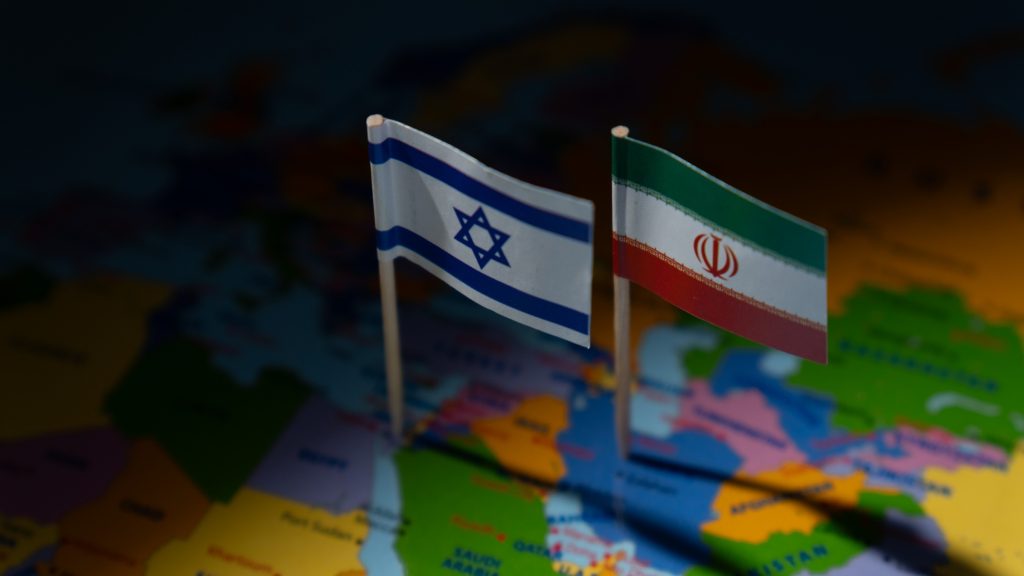
As missile interceptors streaked across the Middle Eastern sky, data centers flickered and AI models churned out predictions, with the line between battlefield and server farm fusing, Israel and the US wage their war on Iran, there’s a new conflict unfolding across code, clouds and defense systems. Has Iran declared war yet? It seems like it.
About two weeks ago, while the US was still building up its forces in the Middle East in preparation for a possible campaign with Israel threatened by Iran, the Jewish state’s defense department announced the completion a series of tests showing key improvements to the David’s Sling air defense system. But the question still boils down to: Has Iran declared war?
Officials labeled the improvements as “significant,” based on operational lessons learned since the outbreak of the October 7 war.
The system, developed and manufactured by Rafael Advanced Defense Systems, is designed to intercept a range of aerial threats, including ballistic missiles, cruise missiles, fighter aircraft, and drones.
Enhancing David’s Sling’s ability to intercept threats originating from Iran could ease the burden on the Arrow 3 system, whose production rate at Israel Aerospace Industries has tripled compared with imminent war with Iran levels.
Israel’s air defense network has also been reinforced by the deployment of the American Terminal High Altitude Area Defense (THAAD) missile defense system by Lockheed Martin, operating alongside the Aegis Combat System on US Navy destroyers.
During last year’s 12-Day War between Israel and Iran, around 550 ballistic missiles were launched from the Islamic Republic, after having Israel threatened by Iran. According to both Israel’s Ministry of Defense and the Israel Defense Forces (IDF), about 85% had been intercepted, but dozens penetrated defenses, causing enough detrimental damage communities and infrastructure, as well as casualties.
The numbers show a reality that extends beyond physical damage. No sign having Iran declared war is shown, is this because of the Middle East’s tech hubs advancements and how the damage cannot be compared to any other nation?
Is Iran War Becoming a Battle for Technological Supremacy?
On Saturday, Israel and the US launched coordinated strikes on Iran, but a separate story detonated online within minutes. AI had “predicted” the date of when Iran declared war on Israel and American military bases spread across the Gulf.
A February 2 exercise by The Jerusalem Post asked four major AI platforms to pick a single day for a hypothetical US strike on Iran, leading to having Iran Israel war now. The models of Claude, Gemini, ChatGPT, and Grok responded differently when pushed for certainty.
Grok gave the clearest single day answer – and evidently, the most accurate: Saturday, February 28, 2026.
Other than having Iran cyber attacks on the US, the narrow scoreboard that social media loves, Grok “won” because its date matched the day the strikes began. As the Post noted, “as users push harder for certainty, models tend to get more specific even when the world stays uncertain.”
That Iran US Israel war episode did not turn AI into a classified forecasting service. But it revealed how high-tension news cycles, algorithmic amplification and platform ecosystems can shape perception as quickly as missiles shape skylines. In that sense, the conflict is unfolding simultaneously in airspace and information space.
People are not seeing how this Iran fighting US during this war is purely a tech war to win the tech race.
How Will Iran Respond to Israel and Us Cyber Attacks?
The battlefield is not limited to interceptors and AI predictions, and Iran cyber attacks could hold stronger cards.
During one of the attacks on American military bases located in the UAE, Amazon Web Services (AWS) said power to one of its data centers in the Emirates was temporarily shut down after “objects” struck the facility, triggering sparks and a fire.
“At around 4:30 AM PST, one of our Availability Zones (mec1-az2) was impacted by objects that struck the data center, creating sparks and fire,” AWS said.
The UAE has been moving from the Iran retaliation US missile and drone strikes following US and Israeli attacks. While AWS did not confirm a direct link, the disruption highlights a new layer of vulnerability, digital infrastructure, as collateral damage.
In a coming war with Iran, the country has previously invested heavily in cyber capabilities and proxy networks. If missiles test Israel’s multi layered defense architecture, Iran and Israel cyber war operations could target financial systems, logistics chains, and cloud infrastructure across the region.
A coordinated cyber campaign against military command systems or civilian data centres would be cheaper than ballistic salvos and potentially just as disruptive.
From Iran retaliation US to interceptor production lines to AI stress tests and cloud outages, the escalation suggests that supremacy will not be measured solely by territory held or missiles fired. It will be defined by whose systems defensive, digital, and algorithmic prove more resilient in a war increasingly fought at the speed of technology.
Has Iran declared war on Israel, US presence in the Middle East, and anyone that stands in its way of vengeance? The short answer is, this is just the beginning of a much longer war, waged by superpowers.
Inside Telecom provides you with an extensive list of content covering all aspects of the tech industry. Keep an eye on our Intelligent Tech sections to stay informed and up-to-date with our daily articles.