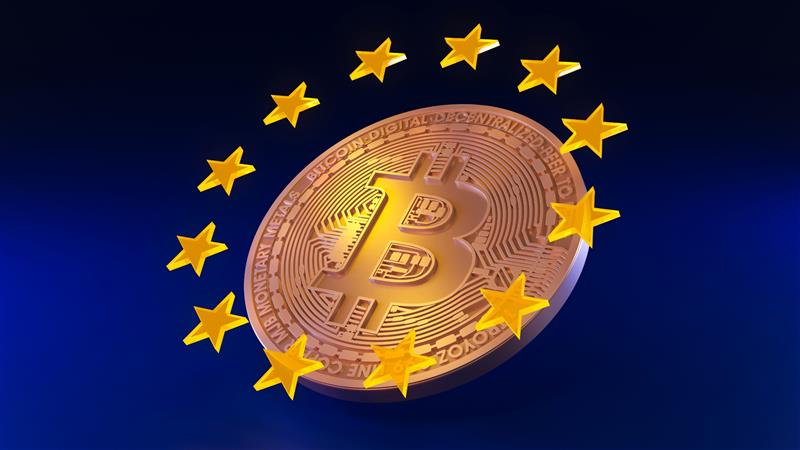
Crypto endured a turbulent 2025 after tariff threats from US President Donald Trump sparked a sharp sell-off, yet across Europe, EU crypto regulation is helping retail investors gain confidence, and crypto ownership continues to rise as awareness grows.
Despite the extreme price fluctuations seen this year, the data available shows adoption continues to increase on the continent. More than 90% of adults in major European economies are now aware of crypto-assets, according to Adan’s Web3 Industry in France and Europe report, based on early-2025 data.
Crypto Ownership Europe Rises Despite Volatility
A European Central Bank survey found that 9% of adults in the eurozone owned crypto assets in 2024, up from 4% in 2022. Ownership varies modestly across countries, from 6% in Germany and the Netherlands to 15% in Slovenia. Greece, Ireland, Croatia, Cyprus, Lithuania and Austria follow closely behind.
“Country differences in ownership shares are typically driven by a combination of digital adoption, risk appetite, and local market structure,” chief risk and compliance officer at BCB Group, told Euronews Business, James Sullivan.
He continued to state that, “Countries with a high degree of financial innovation and a younger, typically male-dominated, investor base tend to lead.”
Sullivan also pointed to regulation and economic context as key factors. When countries lack conventional means of investing, crypto tends to lure speculators, highlighting crypto market speculation Europe, whereas awareness campaigns, which happened in Italy, would increase its use. Non-Euro countries include the UK, which is home to the third largest number of transactions In the world after the US and India.
Across Europe, crypto ownership Europe has more than doubled since 2022, showing that earlier market downturns are not slowing consumer interest.
MiCA Changes the Trust Equation
The surge in ownership coincides with the rollout of the EU’s Markets in Crypto-Assets (MiCA) regulation, the bloc’s first comprehensive EU crypto regulation. MiCA brings crypto assets out of a legal grey zone, setting common rules on transparency, governance, and EU stablecoin regulation.
“This growing confidence is attributed to the cyclical return of global market momentum, but critically, the consumer protection afforded by MiCA,” Sullivan said. “MiCA signals that the EU is recognising the sector as mainstream, which engenders trust and attracts new investors previously cautious.”
Data shows that investment remains the dominant use case. Across the eurozone, 64% of holders use crypto primarily as an investment, compared with just 16% for payments. The Netherlands and Germany top the investment-only ranking, while France leads payment usage at 25%.
Sullivan noted that this split shows the market’s crypto market speculation Europe persists.
“While cryptocurrencies, particularly stablecoins, offer tangible transactional benefits, their use as day-to-day money is still relatively unknown,” he noted.
Exchanges that comply with MiCA, such as EU regulated crypto exchange Kraken, benefit from cross-border licensing, strengthening trust. Clear rules also support stablecoin regulation, Europe crypto AML rules, and regulatory clarity, encouraging more responsible growth.
Platforms licensed as EU regulated crypto exchange can scale across Europe while reassuring users their funds follow digital asset custody rules.
As Europe moves from fragmented oversight to a single market approach, EU crypto regulation is no longer a background issue. It is actively shaping trust, participation and where crypto’s next phase of growth will take place. For investors, transparency, compliance, and EU crypto regulatory clarity matter as much as innovation, giving licensed crypto exchange platforms a distinct advantage.
Inside Telecom provides you with an extensive list of content covering all aspects of the Tech industry. Keep an eye on our Cryptocurrency section to stay informed and updated with our daily articles.