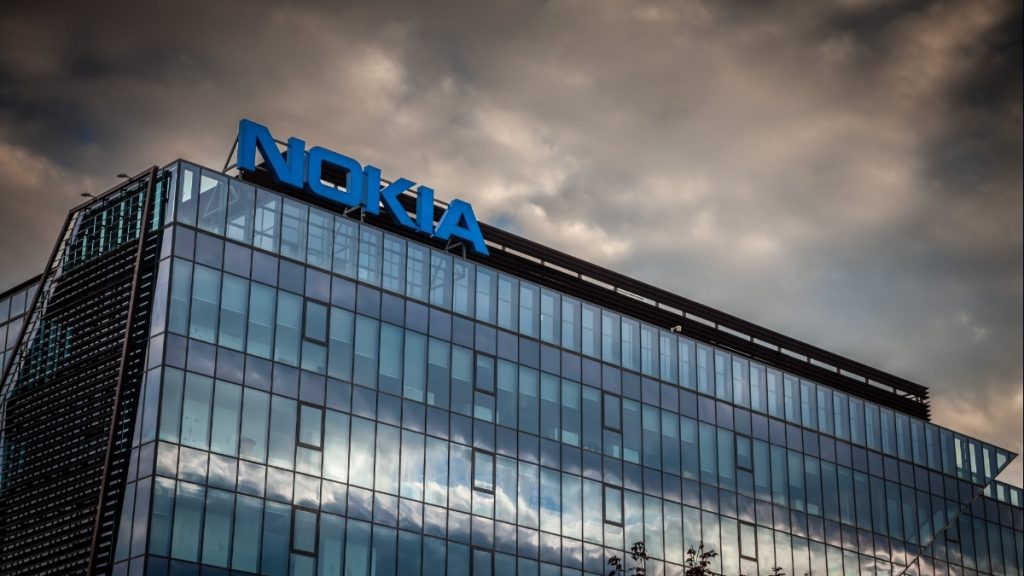
Two decades after Nokia’s ringtone was the sound of mass connectivity, the Finnish company that once failed to anticipate the smartphone is trying something more architecturally ambitious than a handset comeback. Nokia wants to own the intelligent RAN automation layer inside every home network on Earth.
On May 12, according to a press release by Nokia, the company introduced new agentic AI for RAN capabilities for broadband and autonomous networks in Espoo, Finland, aiming to transform telecom infrastructure through self-optimizing fiber, Wi-Fi and 5G systems while advancing RAN automation across telecom operations.
For Nokia, the launch represents more than a telecom software upgrade. The company that once dominated the global mobile phone market is now repositioning itself around AI for RAN network intelligence.
The shift comes as the telecom industry is expected to invest $6.2 billion in agentic AI by 2030, according to Nokia’s announcement, showing how quickly automation and AI-driven infrastructure are becoming central to machine learning radio networks evolution.
The move reflects Nokia’s broader ambition to move from consumer hardware into the machine learning radio networkslayer powering fiber, Wi-Fi and 5G infrastructure worldwide.
From Mobile Phones to Intelligent Ran Automation Infrastructure
The new agentic AI capabilities are embedded across Nokia’s fixed network portfolio, including the Altiplano, Corteca, and Broadband Easy platforms. The company said the technology is designed to help telecom operators manage fiber and Wi-Fi networks more efficiently, improving both deployment speed and operational performance.
Built on experience from more than 600 million broadband lines globally, the system applies autonomous reasoning to tasks such as network planning, troubleshooting, and rollout optimization. Instead of relying on rigid rule-based automation, the AI agents interpret network conditions in real time and recommend or execute actions to improve performance.
President of Fixed Networks at Nokia, Sandy Motley, described the impact in operational terms, highlighting how AI is already reshaping field operations and customer experience.
“AI makes your end-users less likely to churn, your engineering and helpdesk teams more productive, and your field teams connect more homes more quickly,” Motley said.
“Nokia’s Agentic AI puts 600+ million lines worth of broadband experience at the fingertips of every field technician, helpdesk agent, and network engineer, and solves problems before the customer is even aware.”
According to the company, the system can lift first contact helpdesk resolution rates above 50%, reduce network incident qualification to under five minutes, and cut return visits to construction sites and connected homes by half.
At its core, Nokia’s strategy reflects a dynamic spectrum access and management in cognitive radio networks shift in telecom, networks are no longer just physical infrastructure, but adaptive systems are increasingly shaped by software intelligence. This is where agentic AI becomes central not as an add on tool, but as an operational layer embedded directly into network behavior.
AI-driven Automation and the Rise of RAN Automation
Support for Nokia’s direction becomes clearer when viewed alongside its broader work in autonomous networking and 5G optimization. The company has been developing AI radio access network systems that extend beyond fixed broadband into dynamic network environments where demand constantly shifts.
Modern mobile and 5G networks face highly variable usage patterns driven by geography, time, mobility, and real-world events such as concerts or emergencies. This unpredictability makes traditional rule-based management inefficient, often forcing operators to either overbuild infrastructure or accept degraded service quality during peak loads.
Nokia’s approach, developed with partners including AWS, uses agentic AI to enable intent-based network slicing dynamically dividing a single physical network into multiple virtual slices optimized for specific use cases such as gaming, industrial IoT, or emergency response. This allows Smart RAN to adjust performance parameters like latency, bandwidth, and routing in real time.
By combining live network telemetry, historical data, and external signals such as weather or traffic conditions, AI agents continuously optimize configurations without manual intervention. The result is a shift toward self-adjusting systems capable of responding to real-world conditions on a scale.
In a separate announcement, Nokia expanded its autonomous network management portfolio with additional agentic AI capabilities focused on security, analytics, and operations. SVP of Product and Engineering at Nokia Cloud and Network Services, Kal De, emphasized the broader direction of travel.
“AI is the catalyst to unlock L4/L5 autonomy, manage complexity, and orchestrate actions across network domains and operational functions,” said De.
These RAN optimization automation developments also extend into cybersecurity and digital operations, where AI systems detect threats, analyze anomalies, and assist engineers using natural language interfaces rather than traditional coding tools.
The RAN Automation goal is to reduce response times from days to minutes while improving system-wide resilience.
Taken together, Nokia’s pivot illustrates a deeper reinvention embedded in RAN Automation.
The company that once defined the mobile handset era is now betting on a different kind of dominance not ownership of devices, but control of the intelligence layer that powers the world’s networks.
Inside Telecom provides you with an extensive list of content covering all aspects of the tech industry. Keep an eye on our Tech sections to stay informed and up-to-date with our daily articles.
