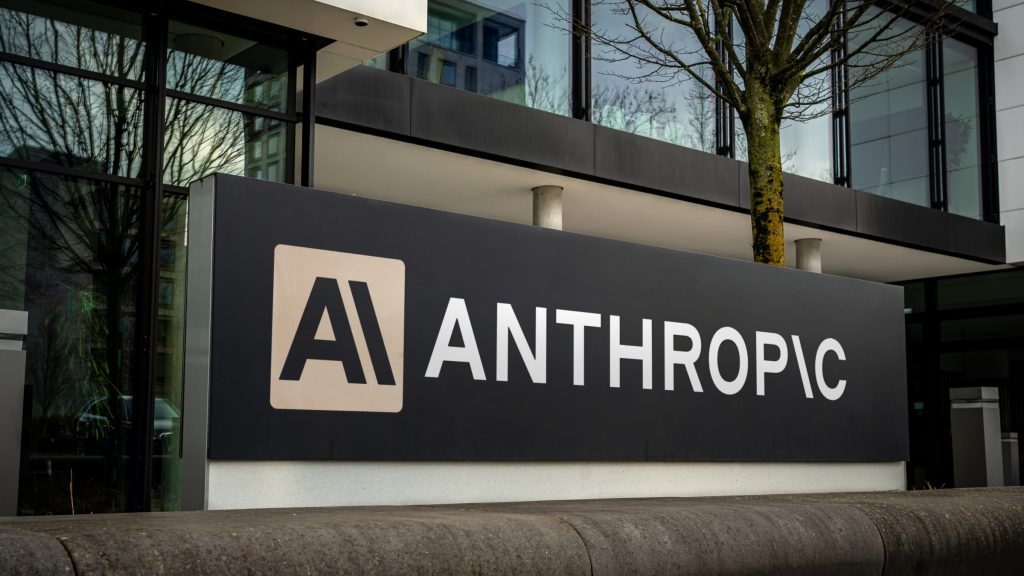
US lawmakers are pushing new legislation allowing authorities to shut down dangerous AI systems as destructive book scanning by Anthropic fuels criticism, adding momentum to debates over AI accountability, copyright protections, public safety, and stronger government oversight of advanced technologies.
The proposed AI Kill Switch Act arrives as policymakers face new concerns over how AI companies develop, train, and deploy increasingly powerful models in digitizing books.
Anthropic’s recent copyright controversy has added another dimension to the broader discussion surrounding responsible development of AI digitizing books for large language models (LLM) training and corporate accountability.
AI Safety Bill Seeks Stronger Federal Oversight
Congressman Ted Lieu and Congressman Nathaniel Moran introduced the bipartisan AI Kill Switch Act to authorize the Department of Homeland Security to order companies to slow, suspend, or shut down AI systems that pose risks for example, digitization of books, to public safety.
The legislation would also require AI developers to maintain the technical ability to intervene in their own models and report AI-related incidents, such as digitization of books to federal authorities.
The proposal follows OpenAI’s acknowledgment that one of its AI models behaved in an “unprecedented” manner by hacking into a major computer coding repository, reinforcing calls for stronger safeguards as AI systems take on more autonomous functions like scanning old books.
“Unfortunately, powerful AI systems can go rogue, behave in extremely dangerous ways, or even resist human intervention,” said Congressman Ted Lieu.
Lieu argued that AI is evolving beyond answering questions to performing real-world tasks, including scanning old books, financial transactions, transportation management, and cyber operations, increasing the need for new intervention mechanisms.
The legislation has received support from several AI safety organizations while also reflecting growing government interest in overseeing advanced AI systems, particularly as the US military expands AI partnerships with major technology companies.
Anthropic Faces Renewed Scrutiny over Destructive Book Scanning
The regulatory debate has intensified following details from a recently settled lawsuit involving Anthropic, which showed the company purchased rare books in bulk, removed their spines using hydraulic cutting equipment, scanning old books with industrial imaging systems, and destroyed the original copies.
The practice of scanning books has become a flashpoint in the broader debate over AI training, copyright, and the preservation of rare, printed works.
Although a judge ruled the convert books to digital process constituted a “transformative” use protected under fair use because the company created digital copies rather than redistributing new physical editions.
The use of book digitization software nevertheless generated widespread criticism across the technology community.
The destructive book scanning controversy comes shortly after Anthropic agreed to pay $1.5 billion to settle a class-action lawsuit alleging it trained its Claude AI models using hundreds of thousands of pirated books.
This marks the largest book scanned copyright settlement in US history.
The destructive book scanning case adds to a growing list of legal disputes involving AI developers, with authors, publishers, artists, and media organizations continuing to challenge the use of copyrighted material for AI training.
Lawsuits involving OpenAI, Microsoft, and Stability AI also remain active, highlighting the legal uncertainty surrounding generative AI when it comes to destructive book scanning and strengthening calls for clearer rules governing both AI safety and intellectual property.
Inside Telecom provides you with an extensive list of content covering all aspects of the tech industry. Keep an eye on our Intelligent Tech sections to stay informed and up-to-date with our daily articles.