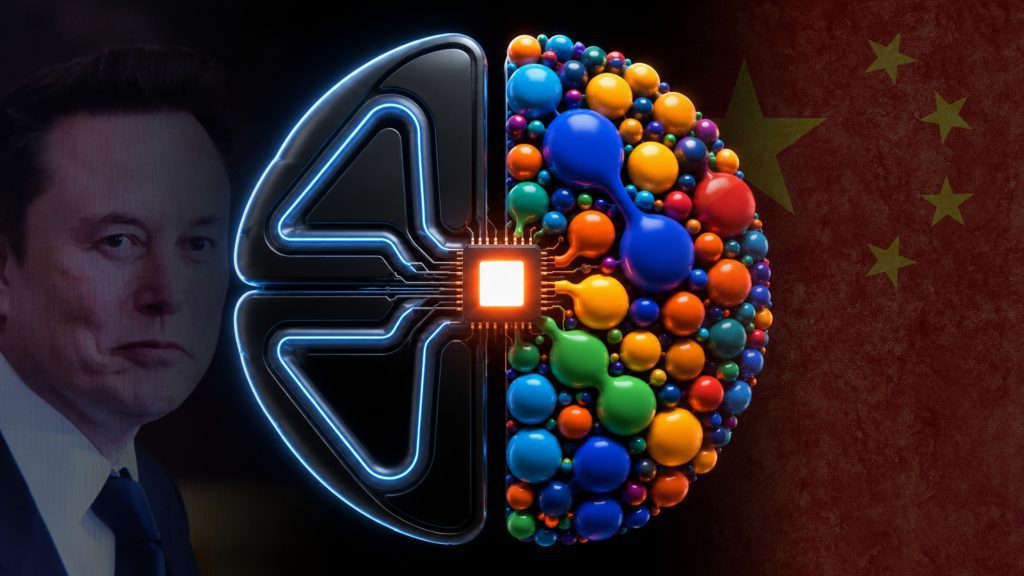
On July 13, China’s BrainCo as a non-invasive alternative to Elon Musk’s Neuralink, as companies seek safer and cheaper ways to turn neural and muscle signals into commands for prosthetics, medical devices and future consumer technology, according to Jefferies.
Neuralink has become a leading name in brain-computer interfaces, or BCI, by placing implants inside the skull to help people with paralysis control computers. BrainCo is taking another route, building systems that work without opening the skull and may be easier to accept, access and scale.
China’s BrainCo Builds a Non-Invasive Path
BCI systems process electrical activity in the brain and translate it into commands for external devices. The technology has allowed people with conditions such as amyotrophic lateral sclerosis to type, play video games and communicate through brain signals.
Neuralink represents the invasive side of industry. Its implants are designed to capture clearer neural signals by sitting close to brain tissue.
Supporters argue that this approach may provide the accuracy needed for movement and communication. However, surgery brings medical risks, costs and longer approval processes.
These limits have created space for companies developing devices that work from outside the skull or use fewer invasive methods.
China’s BrainCo, founded in 2015 through Harvard Innovation Labs, is among the companies building that alternative. The Hangzhou-based startup makes prosthetic hands and wearable devices that read neural and muscular electrical signals.
Its bionic hands, approved by the US Food and Drug Administration (FDA), translate a user’s intended movements into finger motions. BrainCo also makes a sleep aid that it says uses low-intensity electrical pulses to support chemicals linked to stress relief.
Nyx He, a BrainCo partner and senior vice president, said invasive and non-invasive systems address different medical needs. Some conditions may require an implant, she said, while many others could be treated through safer and more affordable devices.
AI Pushes Brain Technology Forward
The main difficulty for non-invasive BCI is reading weak and noisy signals through the skull. BrainCo says it developed dry electrode sensors and an AI algorithm to capture and decode those signals more accurately.
AI is becoming an important part of the industry because it can process large amounts of neural data and identify patterns that older systems may miss. Some researchers believe this could allow people to control robots or connect directly with AI systems.
BrainCo plans to first serve patients whose devices may be covered by insurance. It then wants to enter areas including ADHD and depression before moving into consumer electronics and licensing its platform to other companies.
Rui Ma, founder of Tech Buzz China, said proven BCI products can improve life for severely impaired patients. But she warned that wider human enhancement remains distant.
“I don’t think anyone is remotely close to realizing that … . Augmentation is like sci-fi at this point,” Rui Ma said.
Investors also disagree over which technology will win.
“Non-invasive is like trying to capture light in distant galaxies,” said Alex Zhavoronkov, CEO of Insilico Medicine.
Meanwhile, China is supporting the sector through national policy, hospital partnerships and insurance categories.
“China has now incorporated BCI into its industrial policy apparatus,” said Paul Triolo of DGA-Albright Stonebridge Group. “Beijing thinks in terms of not just one breakthrough technology, but the whole supply chain.”
Despite US-China tensions, BrainCo’s goal is broader access. The race is therefore not simply Neuralink against BrainCo. It is a wider test of whether implanted systems can deliver stronger performance, or whether non-invasive tools can reach more patients and eventually enter everyday consumer technology.
Inside Telecom provides you with an extensive list of content covering all aspects of the tech industry. Keep an eye on our Intelligent Tech sections to stay informed and up-to-date with our daily articles.
