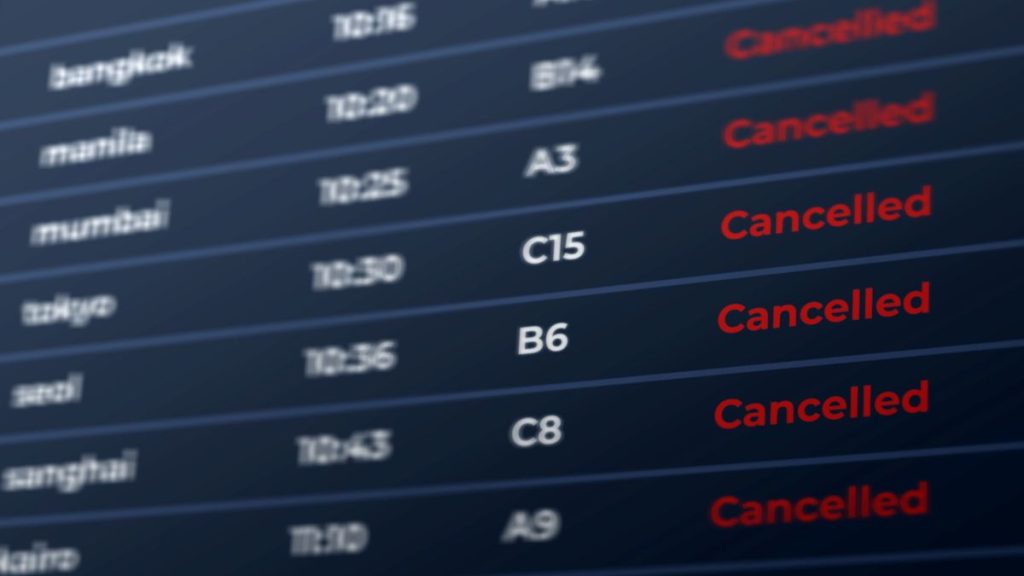
On November 18, US Secretary of State, Marco Rubio, said that investigators had found no evidence linking the week’s outages, putting critical infrastructure cybersecurity under scrutiny as separate failures disrupted flights, work email, and bank transactions that people depend on.
Rubio told reporters in the Philippines there was “zero evidence” of a shared cause or malicious involvement, adding that “each of them are distinct, and they’re different in their causation.” Early accounts of the major tech outages pointed to a network change, a router upgrade, and a banking software fault. For people waiting to board or send money, those differences mattered less than knowing when service would return.
What the recent tech outages exposed
Microsoft traced its disruption to a network capacity upgrade, and a subsequent network change. Its preliminary findings, cited by the Cloud Security Alliance, described how the system switched to a backup route and sent extra traffic through equipment already running below capacity, exposing a software defect dating back to July, interrupting Outlook and other Microsoft 365 services. The Microsoft tech outages also affected Anthropic’s tools for connecting its assistant to Microsoft 365 and Outlook.
The Federal Aviation Administration (FAA) pointed to a router upgrade. Reports of all US flights grounded due to FAA systems outage referred to the agency’s pause in departure, which lasted more than four on November 13.
The agency says contractor L3Harris installed a router at a remote radio site in El Dorado, Arkansas, flooding its telecommunications network with data. The second router was in Amarillo, Texas, adding to the instability.
Communications and radar feeds failed at 17 of 22 of the FAA’s 22 en route control centers, and cancellations carried into the weekend.
Hewlett Packard Enterprise, owner of Juniper Networks, said the device was operated as configured by the installer. Greg Feith, a former senior air safety investigator at the National Transportation Safety Board, questioned how one component could ground a country.
“Why is the air traffic control system vulnerable to a single-point failure? That doesn’t make any sense,” said Feith.
According to the Union, controllers have not been briefed on the cause, and investigators have not established why the fault spread so far. The FAA has paused further Juniper installations and will reconsider daytime maintenance at remote sites.
JPMorgan Chase blamed a software bug for its disruption. Customers reported trouble accessing accounts and using Zelle, and delays reached customers at other banks through transactions involving Chase. Bank of America and US Bank also reported problems. The bank’s episode shows how widespread tech outages can begin inside one company and reach people whose own providers made no changes.
The recent tech outages also affected Apple services and a classified internal network used by the National Security Agency. Apple cited an internal update, while the agency reported problems during scheduled maintenance. Those separate explanations helped inform the early assessment of the Big Tech outages, although several investigations were still open.
“The evidence so far points toward legitimate efforts to secure our systems, not malicious activity,” said Senator Mark Warner, vice-chair of the Senate intelligence committee.
Timing can help build a timeline, but it takes more evidence to connect major tech outages. Teams compare service logs with records of changes, look for unauthorized access, and check whether reverting a change clears when the change is undone gives them a testable explanation, which makes cybersecurity network defense part of diagnosing failures, not just preventing attacks.
Safer Upgrades and Backups that Hold Up
AI is helping researchers find software flaws faster and adding pressure on the teams responsible for AI patch management.
The problem is the teams that are built “to implement those patches are not necessarily operating at the speed and scale that the vulnerability discovery is happening at,” said former director of the Cybersecurity and Infrastructure Security Agency, Chris Krebs, to public radios and magazine Here & Now.
The Cloud Security Alliance found no public evidence tying a patch for an AI-discovered flaw to any specific incident that week. For critical infrastructure cybersecurity, that leaves how teams test and deploy changes as the question worth examining while individual causes are established.
A framework for improving critical infrastructure cybersecurity can help operators decide which updates need urgent attention, test them on a small group of systems first, and keep a tested way to reverse it and a clear decision about who can authorize that step.
November’s Big Tech outages also showed how backup arrangements can carry a failure into systems they are meant to protect. At Workday, a problem involving its disaster-recovery environment affected connections to production databases, and the company restricted access to some production systems while it worked. Critical infrastructure cybersecurity depends on backups that fail safety.
Tests of enterprise cybersecurity infrastructure should check that backups can operate independently and handle demand when the main system is already under strain.
For people caught in massive tech outages, early messages should say which services are affected, and when another update will arrive.
In critical infrastructure cybersecurity, a statement that investigators have found no signs of intrusion so far gives people a clearer picture while technical checks continue.
That makes communication part of any framework for improving critical infrastructure cybersecurity.
A bank can tell customers whether delayed transfers are pending, so nobody pays twice.
The week’s failures put critical infrastructure cybersecurity in terms customers could recognize. A backup matters when it keeps a service usable under pressure. An explanation matters when it helps someone decide what to do while waiting for that service to return.
The next test of critical infrastructure cybersecurity will come when organizations have to make essential repairs while keeping those services available.
Inside Telecom provides you with an extensive list of content covering all aspects of the tech industry. Keep an eye on our Cybersecurity sections to stay informed and up-to-date with our daily articles.
