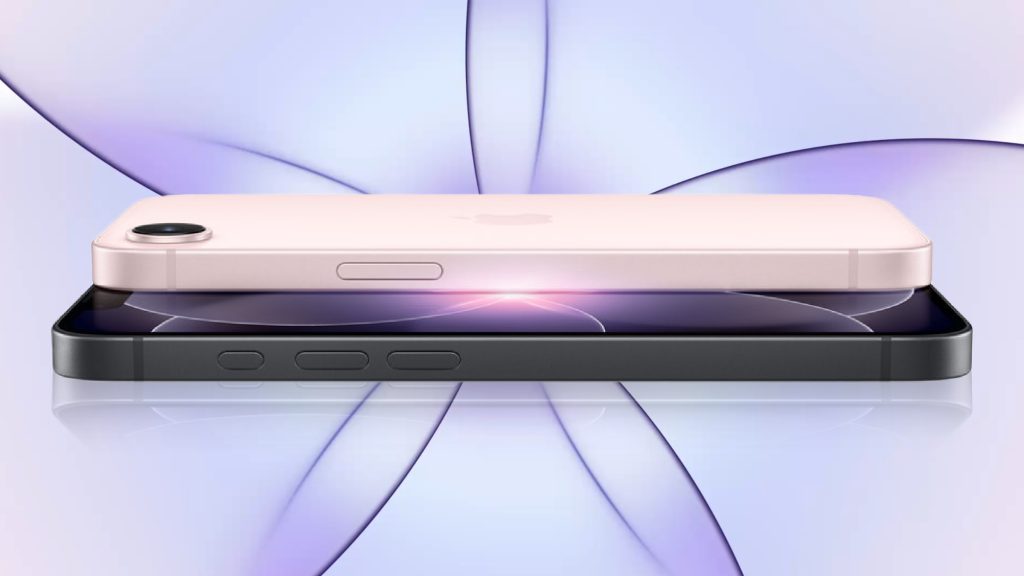
On March 11, the new iPhone 17e was released, and despite being on the shelves for a matter of days, it has already acquired a second, entirely fictional biography. And, no it’s not about the iPhone 17e specs but rather Apple’s sovereign chip agreement with Israel.
There’s a new storyline circulating on social media that the iOS developer finalized a sovereign chip agreement with Israel to manufacture processors, as “the iPhone 17e comes with an A19 chip, full support for Apple Intelligence and a new cellular modem developed in Israel,” according to The Jerusalem Post.
Apple aggressively expanded its phones’ AI strategy on different fronts, from adding flagship level silicon and on-device intelligence into the iPhone 17e specs, to extending reliance on Israel linked Research and Development (R&D) engineering operations.
It’s worth saying that, naturally, the news triggered consumer scrutiny over the Apple’s global chip ecosystem, and the use of Israeli development of its iPhone chips.
The iPhone 17e rumor arrives as Apple Intelligence attempts deeper integration into mainstream smartphone markets without dramatically changing external designs. Instead, the iPhone-parent concentrated on internal upgrades tied to AI performance, wireless connectivity, battery efficiency, and computational photography.
Fact-checkers, and supply chain analysts, are saying the Israel iPhone 17e rumor is factually incorrect. If that’s the case, then how come an Israeli media such as The Jerusalem Post – as credible as it can be in Israel and the Western world – is breaking the news on the Israeli-Apple collaboration?
Needless to say, none of the debunking efforts around the iPhone 17e rumor meaningfully slowed the claim’s circulation.
Online claims that Apple is producing the iPhone 17e in Israel have fueled conversations about the company’s semiconductor strategy and political and commercial consumer responses, because one thing is true: Apple did collaborate with Israel on a cellular modem.
iPhone 17e Rumors Pushes AI Deeper into Its Cheapest iPhone
The iPhone 17e arrives as the Big Tech giant continues to push its Apple Intelligence strategy into its entry-level devices, focusing less on external redesign and more on internal silicon, connectivity, and AI performance upgrades.
Apple quietly announced the iPhone 17e release date with a press release, rather than a big launch event. It was a subtle but tactical upgrade to its budget line.
The device comes with the A19 chip, full support for Apple Intelligence features, and improved internal efficiency, while maintaining the same $599 iPhone 17e price point and increasing base storage to 256 GB.
The actual computational brain of the smartphone, the A19 chip, is manufactured at Taiwan Semiconductor Manufacturing Company (TSMC) factories in Taiwan, as Apple’s core processors have been for years.
The A19 chip enables faster on-device AI, and Apple Intelligence tools such as Live Translation, Visual Intelligence, and improved Siri. Alongside it, Apple has introduced two key silicon components: the N1 wireless chip and the C1X cellular modem.
The iPhone 17e’s C1X cellular modem – in-house designed 5G cellular modem – was developed in key parts of the Occupied Territories in significant part through Apple’s long established research hubs in Haifa and Herzliya.
These chips strengthen Apple’s control over connectivity. The N1 handles Wi-Fi 7 and Bluetooth, while the C1X modem boosts cellular efficiency and reduces power consumption, extending battery life.
The iPhone 17e also adds MagSafe support, improves display durability with Ceramic Shield 2, and upgrades scratch resistance and anti-reflective coating technology, while maintaining the familiar 6.1-inch design and notch-based display system.
Apple is thinking of keeping its entry-level pricing stable while steadily increasing internal performance, AI capability, and silicon independence across its product lineup.
Even though the collaboration is neither new – nor secret – it evidently highlights Israel’s relationship with Apple as a serious node in the global semiconductor engineering network. The iPhone-parent’s relationship with the Jewish state is decades long, not recent. The collaboration is deeply rooted.
Yet, contrary to circulating iPhone 17e rumors, this does not mean Apple is making chips in Israel or entering a state partnership. Again, it’s about the importance of Apple’s engineering operations in Israel, which contribute to modem design, wireless systems, AI, and semiconductor architecture.
How Much Will the iPhone 17e Cost?
The iPhone 17e starts at $599, matching last year’s pricing while doubling base storage from 128 GB to 256 GB. Apple is presenting the smartphone as a competitive entry point into its AI ecosystem as the industry’s prices rise.
One report on the iPhone 17e release date noted that Apple refreshed its entry device “with an A19 chip, full support for Apple Intelligence and a new cellular modem developed in Israel – all at the same price tag of 599 dollars.”
“If you wish to get the iPhone 17e with 512 GB of storage, the price is $799,” the report stated, while carriers are also expected to offer aggressive trade-in promotions.
The Cupertino-based giant could also face another kind of cost, consumer perception for its 17e iPhone.
Social media posts falsely claiming Apple “signed a deal with Israel” to manufacture a special “iPhone 17s” chip rapidly circulated online following the launch. However, fact-checking coverage reviewing the claims concluded that “there is no credible evidence that Apple recently signed a government-level or state-to-state agreement with Israel to manufacture chips.”
Even if the iPhone 17e leaks are technically incorrect, viral political stories can influence purchasing behavior. In this case, when it comes to getting in bed with Israel, some users will find that as a deal breaker, no matter how advanced the new iPhone 17e specs are.
Currently, Apple has always had most of its brand power resting on consumer trust and product appeal.
Apple’s sustained reliance on global semiconductor talent, including teams in Israel, exposes the modern chip industry’s reality, where engineering, AI infrastructure, and supply-chain diversification have become central competitive battlegrounds. Fused with geopolitics will just become a recipe for disaster for the iPhone-parent.
The whatever iPhone 17e specs, or any order model specs, will not sustain the company’s purchasing power. Technology and smartphones are no longer simply selling products, as any device can be infiltrated. Consumer now see tech companies as “who you align yourself with, tell me a lot about your business ethicality.” If Apple maintains, or cements, its relationship with Israel for whatever business needs it has with the Jewish state, consumer might perceive it allowing the further infiltration by Israel, as seen throughout the past three years in Lebanon, Occupied Palestine, Syria, and other neighboring countries.
Operating at the midpoint of consumer technology, semiconductor politics, and global strategic competition, even an entry level 17e iPhone can become part of geopolitical conversations.
Inside Telecom provides you with an extensive list of content covering all aspects of the tech industry. Keep an eye on our Tech sections to stay informed and up-to-date with our daily articles.
