On May 21, Nvidia reported an $81.6 billion fiscal quarter, but instead of this growth commanding unqualified euphoria from analysts and investors, instead, the leader of all AI chip makers spent the week learning that the hyperscalers – Big Tech – buying its GPU in volumes may be building a correction that could take Nvidia’s valuation down.
It seems like Tech giants are trying to free themselves from Nvidia’s tight grip, as Google and investment company Blackstone launched a $5 billion venture in the US, using custom silicon to build massive data centers, intensifying challenges.
Nvidia changed how it reports its data center revenue, by breaking the numbers into two distinct buckets: hyperscalers and an AI Clouds, Industrial, and Enterprise (ACIE) category, trying to prove its business is diversified.
While hyperscalers account for half of Nvidia’s data center revenue, the ACIE category is growing faster, like 31% each quarter compared to the hyperscalers’ 12%. Meanwhile, Huang remains confident that this broader market will eventually become the company’s primary driver, noting that wider industries take longer to adopt the technology.
Meta, Amazon, Google, and Microsoft have collectively committed a whopping $700 billion – or north of – to AI infrastructure buildout. And with this increasing directness, Wall Street is on edge, asking whether the returns justify the capital expenditure (CapEx).
The Charging Bull is beginning the ask, what happens to Nvidia’s order book if answer is no? The numbers are recorded, but the narrative the chip maker giant has long relied on is under attack by the Big Tech customers it long served.
For years, these giants, alongside Oracle have spent fortunes buying Nvidia AI and cloud chips to power their digital boom, but there’s also a sense of restlessness on Wall Street over when these multi-billion-dollar investments will pay off.
The current relationship between one of the world’s leading AI chip makers, Nvidia and its biggest customers, is becoming a complex game of self-reliance.
Can Big Tech Break Free from AI Chip Makers Monopoly?
Nvidia is trying to reassure Wall Street by pointing to a broader customer base while Big Tech is quietly working on building their own AI chips hardware, delivering a threat to Nvidia at a very tricky time.
On May 18, Alphabet – Google’s parent company – and Blackstone announced their joint tensor processing unit (TPU) that will offer the Chrome parent’s custom TPU to enterprise customers on compute as-a-service economics.
The Google TPU AI chip news is an assault on the pricing architecture that made Nvidia’s GPU monopoly an extremely lucrative business.
The joint announcement is the most crystal clear sign that the world’s most influential companies seek to reduce their reliance on external AI chip manufacturers. Soon, Big Tech will provide alternatives. They will be scalable and will not require paying Nvidia’s margins.
It’s a game of literal monopoly. A $81.6 billion quarter for Nvidia. A $5 billion countermove by Google. But the monopoly of the AI chip makers rulers remains intact – for now.
The partnership between Blackton to develop Alphabet’s Google tensor processing units also carries a total project value of $25 billion. The colossal capital deployment at such a scale will make the initiative structurally comparable to the hyperscaler buildout it is designed to disrupt.
“We see a generational opportunity to invest capital in scale building AI infrastructure,” said Jon Gray, Chief Operating Officer (COO) of Blackstone.
Google is not alone. Amazon, Meta, and Microsoft are all aggressively designing custom silicon. By creating tailored hardware, internal companies that make AI chips can optimize infrastructure for their specific software needs while cutting out costs.
https://youtu.be/RBmOgQi4Fr0?si=P_U2UJer6epOgGZi
“Right now, almost the entire ecosystem is built on top of Nvidia’s chips,” noted Chris Miller, author of Chip War.
Thomas Kurian, chief executive of Google Cloud, added that the venture would help meet growing demand for TPUs while giving customers more options. Yet, this shift poses a long-term threat to the current leader of AI chip manufacturers in the market.
“There is the potential for this to entirely disrupt Nvidia, so I think it is a pretty significant risk,” warned Jay Goldberg, a semiconductor analyst at Seaport Research.
Despite these multi-billion-dollar efforts to break free, a reality is setting across Silicon Valley that Big Tech cannot escape Nvidia.
While hyperscalers are making strides with proprietary AI chips to manage internal operations, they remain trapped on a relentless technological loop. Nvidia’s unparalleled product rhythm moves at a speed that other companies that make AI chips cannot match.
Google is ramping up its infrastructure with specialized AI chips for cloud computing, yet Nvidia stays a step ahead, already transitioning from its massive Blackwell architecture to its next-generation Vera Rubin platform.
For now, the hunger for computing power is massive that alternative AI chip manufacturers are entering the scene just to build out basic capacity. However, when it comes to true architectural leadership, the Nvidia competitive positioning AI chip market is fiercely unchallenged.
As industry analyst, Stacy Rasgon points out, it isn’t about who is winning among AI chips companies, but whether anyone can build physical infrastructures fast enough to keep up with the future. For Big Tech, achieving total independence from the ruler of all AI chip makers is a luxury they cannot afford while fighting to stay relevant on the AI scene.
Investors’ Worry about AI Chips Companies Overspend
Big Tech giants spent money on infrastructure, and Nvidia’s profits soared.
The annual financial commitments of these major cloud providers topped a $725 billion, doubled in a single year, leading consumers to wonder if the returns justify the costs, or if the industry is trapped in a bubble.
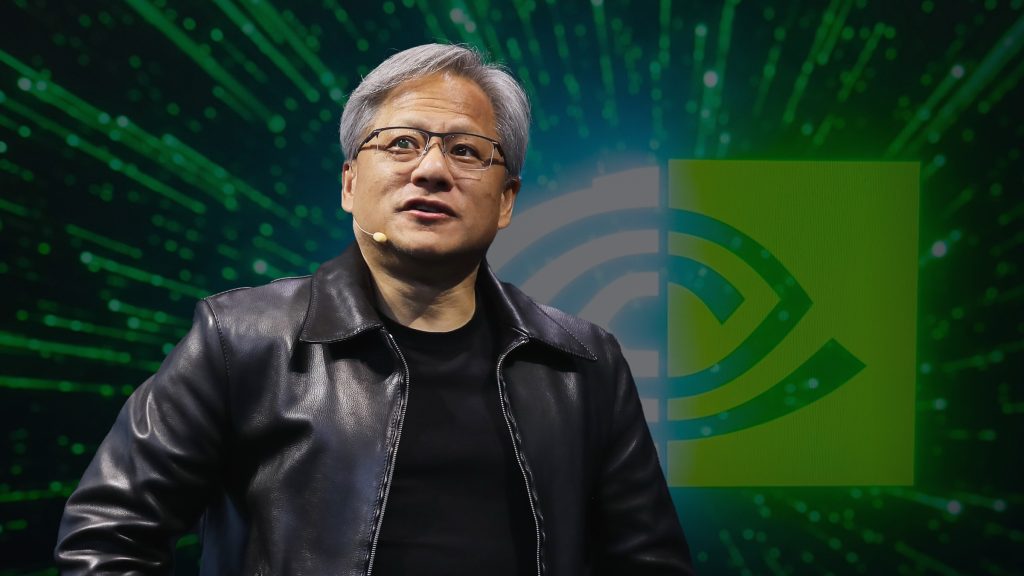
“It’s really about the fact that our business has now evolved and grown to such a large scale. It’s helpful to segment it, so that you have a better understanding of how our business works,” said Nvidia CEO Jensen Huang.
Earlier this year, Evercore analysts warned earlier from these commitments pushing tech giants’ cash flows into negative territory, eventually deepening the financial gap of mainstream AI chips companies.
Inside Telecom provides you with an extensive list of content covering all aspects of the tech industry. Keep an eye on our Tech sections to stay informed and up-to-date with our daily articles.
