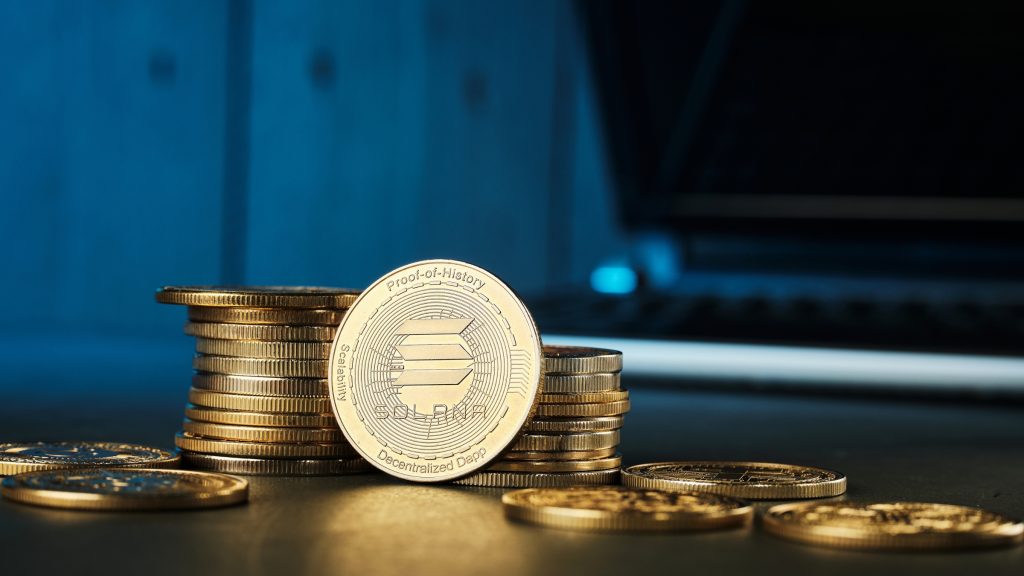
Solana’s growing role in corporate treasuries is opening new investment and staking opportunities, but misleading Solana mining claims, unclear financing, and quantum security risks could decide whether prepared companies gain lasting value while unprotected investors are left carrying the cost.
SOLAI, formerly BIT Mining, treasury strategy brings those opportunities and risks into focus. Its large share authorization could support further investment in Solana mining, but without a clear financing plan, it also raises concerns about dilution before staking returns and long-term security can deliver meaningful value.
Solana Treasury Growth Meets Financing Risk
SOLAI won shareholder approval on August 14 to expand its authorized Class A shares from 38.4 billion to 70 trillion before completing a 700-for-1 consolidation. Afterward, the ceiling stands at 100 billion shares, giving the company enormous room to raise capital or issue equity.
The scale matters. In comparable post-consolidation units, the previous authorization would have equaled about 54.86 million shares. The new ceiling is roughly 1,823 times larger, yet SOLAI identified no financing plan, acquisition, compensation program or other purpose for that capacity.
That gap makes transparency central to its Solana treasury case. More shares could help the company buy SOL, expand staking or finance growth. They could also dilute existing investors if issued without a clear strategy. Companies using crypto as a treasury asset may attract capital, but investors need to understand how purchases are funded and who carries the risk.
The decision followed pressure on SOLAI’s listing. The New York Stock Exchange suspended its American depositary shares on July 16 after its average global market value stayed below the exchange’s $15 million minimum for 30 consecutive trading days. SOLAI did not appeal, and its shares moved to the OTC Pink market under SLAIY.
CryptoSlate calculated that disclosed issuances before later changes would convert to about 4.41 million post consolidation shares. On that limited basis, nearly 99.996 billion shares could remain authorized but unissued. An updated share count and stated purpose are essential for holders to decide whether Solana exposure justifies dilution risk.
Returns come from staking, not Solana mining.
Staking Income Faces a Quantum Test
Solana does not use Proof of Work, so hardware cannot produce SOL as Bitcoin machines produce BTC. As the supporting guide states, “Solana cannot be mined.”
The Solana consensus mechanism combines Proof of Stake with Proof of History, replacing energy-heavy competition with validators that lock tokens and confirm transactions.
Advertisements for mining Solana through rigs, phone applications or cloud software should therefore be treated carefully.
Any service presenting sol mining as direct block production describes a process the network does not support.
The practical way to earn Solana is staking. A holder delegates SOL to a validator and receives part of the network rewards without specialized hardware or a large electricity bill.
“Staking is the real alternative,” the guide explains.
Delegated staking offers the simplest route to earn Solana, while liquid staking gives users a tradeable token representing their locked position. Returns vary by validator and network conditions, but the guide places typical annual yields near 5% to 7%.
Those Solana staking rewards could make SOL more useful to corporate treasuries than an asset waiting only for price appreciation. A company can hold tokens and generate income, though volatility may erase the dollar value of that yield.
Investors considering solo staking face a harder route because running a validator requires substantial holdings, technical knowledge and enterprise equipment.
Using a trusted Solana trading platform or staking wallet is easier, but users must still examine fees, custody and withdrawal conditions.
The language around Solana mining can hide the real investment model.
People searching for mining Solana are usually looking for yield, yet false services may lead them toward weak products or scams.
Solana mining also faces a security test. Google has set 2029 as its target for moving products toward post-quantum cryptography, warning that progress in quantum hardware and error correction has made the threat more urgent. It said the change is needed so “users can authenticate securely.”
Solana developers introduced a quantum-resistant vault in January 2025 using hash-based signatures and new keys for every transaction. However, users must place funds inside Winternitz vaults; standard wallets do not receive network-wide protection.
That distinction could decide who benefits. Companies that earn Solana through staking while protecting custody systems may build stronger treasury returns.
Investors who treat sol mining as effortless income, or ignore wallet security, may face losses that higher yields cannot repair.
Solana’s appeal now rests on more than price. Transparent share financing can turn corporate demand into credible investment, while clear staking can help participants earn Solana without false promises. Stronger quantum protection must complete that foundation.
Without those safeguards, Solana mining may remain a misleading label attached to unclear risk. With them, Solana could become a serious treasury and staking asset, rewarding prepared companies and investors while leaving opaque issuers and unprotected holders behind.
Inside Telecom provides you with an extensive list of content covering all aspects of the Tech industry. Keep an eye on our Cryptocurrency section to stay informed and updated with our daily articles.
