AI is making more progress in enterprise communication channels, with speed and automation guaranteeing efficiency, but still poses a risk of making things worse. In the healthcare, financial, governmental and other critical industries, the issue is not merely how much work AI can perform but how much control enterprises are willing to cede.
As cloud platforms combine real-time data and AI agents, the enterprise needs to strike a balance between autonomy and resilience, security, accountability and human judgment. The next generation of communications could become faster and more personalized, but greater intelligence also means greater operational risk when systems fail or decisions go unchecked.
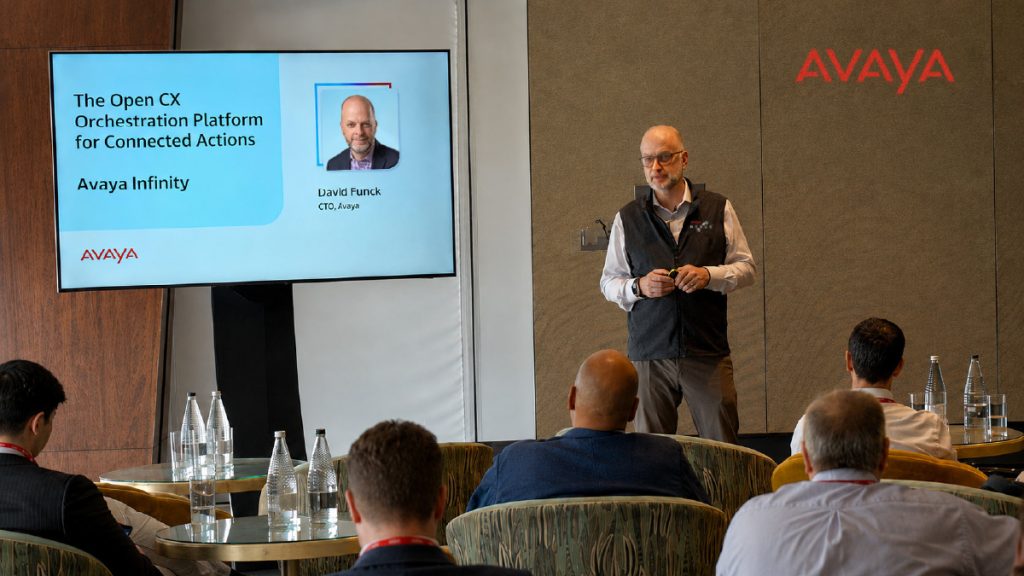
In a conversation with Inside Telecom Magazine, the discussion moved beyond what AI can automate to what enterprises should control. It is not simply about adding intelligence to communication systems, but about rethinking how decisions are made, monitored, and escalated when the cost of failure is more than a missed call or a delayed response.
For healthcare, financial, government, utilities, and emergency services, that distinction carries even greater weight. AI agents can accelerate workflows and connect disparate systems, but autonomy without resilience, governance and clear human intervention can become a route to operational risk rather than efficiency.
As enterprise communications grow more integrated, the real test will be building systems that are not just more intelligent, but more accountable in case of failures.
AUTOMATION, CONTROL, AND OPERATIONAL RISK
1. AI can make mission-critical communications faster and more efficient, but greater automation can also create new points of failure. Enterprises should permit AI to independently undertake certain communication functions, while others require human oversight. Where should enterprises draw the line between autonomous decision-making and human oversight? Where should responsibility lie when an automated decision causes disruption?
The line should be drawn based on two factors: confidence and consequence. AI can operate autonomously when the task is well understood, the system can be evaluated continuously, and the cost of an incorrect decision is low. As the potential consequences increase, so should human involvement.
Consider a financial services interaction. AI can identify a suspicious transaction, gather information and automate routine steps. But if a customer is traveling and requests that a replacement card be sent to an unfamiliar address, the risk profile changes. That is the point where a human should validate the decision.
Human oversight should be purposeful, not simply added to every process. Organizations need clear thresholds for when AI can act and when it must escalate. And accountability ultimately remains with the enterprise deploying the technology. AI may make or recommend a decision, but organizations must establish the policies, guardrails and monitoring that determine what it is authorized to do.
2. Many organizations are trying to replace old communications infrastructure without disrupting the critical services that still depend on it. What technical safeguards should companies use when integrating cloud and AI into mission-critical communications, including redundancy, failover, real-time monitoring, and human intervention, to prevent service disruption?
Modernization should not require an organization to abandon the integrations its critical operations still depend on. That is particularly important in healthcare, financial services, government, utilities and emergency services, where the stakes for communications are extremely high.
Our approach begins with resilience by design. That includes redundancy across availability zones, automated monitoring, and the ability to identify and address issues before they affect service. We are also architecting for multi-region resiliency and supporting survivability at locations where communications must continue even if connectivity to the cloud is interrupted.
Equally important is interoperability with mission critical systems. Organizations may have deeply embedded integrations with paging, radio, emergency services, and other operational systems. Modernization should preserve those investments while allowing customers to move toward a more modern architecture at a pace that reflects their operational requirements.
REGULATION, SECURITY, AND ACCOUNTABILITY
3. AI in communications can enhance and speed up service delivery, but an error in healthcare, financial services or government can expose sensitive data or cause real harm. Why do these sectors need to take a different approach to AI? How effectively are current regulations keeping pace with AI adoption in highly regulated sectors?
There is a fundamental difference between using AI to recommend a product and using it in an interaction involving a patient’s care, a financial transaction or an emergency response. The consequences are different, so the tolerance for risk must be different as well.
In highly regulated environments, organizations need to think about AI as part of a broader system of data governance, security, sovereignty and operational control. They need to know what data an AI system can access, where that data resides, what actions the system is authorized to take and when a human must intervene. They also need mechanisms to continuously evaluate whether the system is behaving as intended.
Regulation is evolving at a pace that lags AI innovation, but because of reputational and liability risks, companies need to maintain rigorous AI guardrails even if a regulatory boundary has not yet been set. Organizations cannot assume today’s requirements will remain static. That makes architectural flexibility especially important. Enterprises need control over their data, models and deployment environments so they can adapt as requirements change rather than redesign their communications infrastructure every time a new regulatory obligation emerges.
4. As AI-driven communications become more autonomous, enterprises could gain efficiency but lose visibility in how decisions are made. What governance frameworks and safeguards should be adopted, how much human oversight is adequate, and how can organizations maintain accountability when the system is acting on its own?
Governance cannot be something organizations add after an AI system goes into production. It has to be designed into the architecture and operating model from the beginning.
That starts with data governance, then requires clearly defining what an AI agent is allowed to access and what actions it can take. Organizations then need access controls, guardrails and ongoing evaluation to make sure the system continues operating within those boundaries. AI performance can drift, models can change and the context surrounding a decision can evolve, so evaluation cannot be a one-time exercise.
Human oversight should also be risk-based. Requiring a person to approve every low-risk action can eliminate much of AI’s value and may create its own operational problems. Instead, enterprises should establish escalation thresholds based on confidence and consequence. The higher the risk or uncertainty, the stronger the case for human judgment. Ultimately, autonomous does not mean unaccountable. The organization remains responsible for defining, monitoring and enforcing the boundaries within which AI operates.
BUILDING THE NEXT COMMUNICATIONS ENVIRONMENT
5. Enterprises increasingly rely on several cloud platforms, collaboration tools, and customer communication systems, but adding more technology does not automatically create a more connected experience. What technical architecture should organizations adopt to integrate fragmented communication systems into a unified platform?
The answer is not another monolithic platform that requires every system, workflow and data source to be replaced. Large enterprises are too complex for that approach. What they need is an open orchestration layer that can connect the systems they already have while giving them a path to introduce new capabilities over time.
That architecture should be API-driven and able to connect communication channels with CRM, ERP, operational systems, enterprise data and AI. A well-governed common data layer is equally important because orchestration becomes far more valuable when both human and AI agents have access to the context surrounding an interaction.
Open standards such as Model Context Protocol are also creating new ways for AI agents to securely access context and interact with enterprise tools. The objective should be to create a connected environment in which data and context can follow an interaction across channels and systems. Enterprises should be able to choose the cloud, AI models and applications that fit each use case rather than being locked into a single technology stack.
6. AI, cloud platforms and real-time data are beginning to converge across enterprise communications, creating the ability to have faster, more personalized interactions. What might the next generation of such systems look like, what features will be standard, and what risks could arise as communications get smarter and more interconnected?
The next generation of enterprise communications will be defined by context and orchestration. Instead of treating every interaction as an isolated phone call, chat or email, systems will understand who the customer is, what has already happened and what needs to happen next. AI agents will be able to work alongside human agents, access real-time information and take authorized actions across enterprise systems.
We call that human and AI partnership model tandem care. AI can handle tasks such as gathering information, launching workflows or coordinating multiple actions in parallel, while people focus on situations that require judgment, empathy or accountability. That combination can create an experience that is both more efficient and more human, and far better than either working independently could deliver.
But greater connectivity also expands the potential consequences of a mistake. As AI gains access to more data and the ability to take action, security, governance, resilience and observability become even more important. The smartest communications environment will not simply be the most automated. It will be the one built for flexibility and robust governance which organizations and their customers can trust.
Inside Telecom provides you with an extensive list of content covering all aspects of the tech industry. Keep an eye on our Interviews to stay informed and up-to-date with our daily articles.
