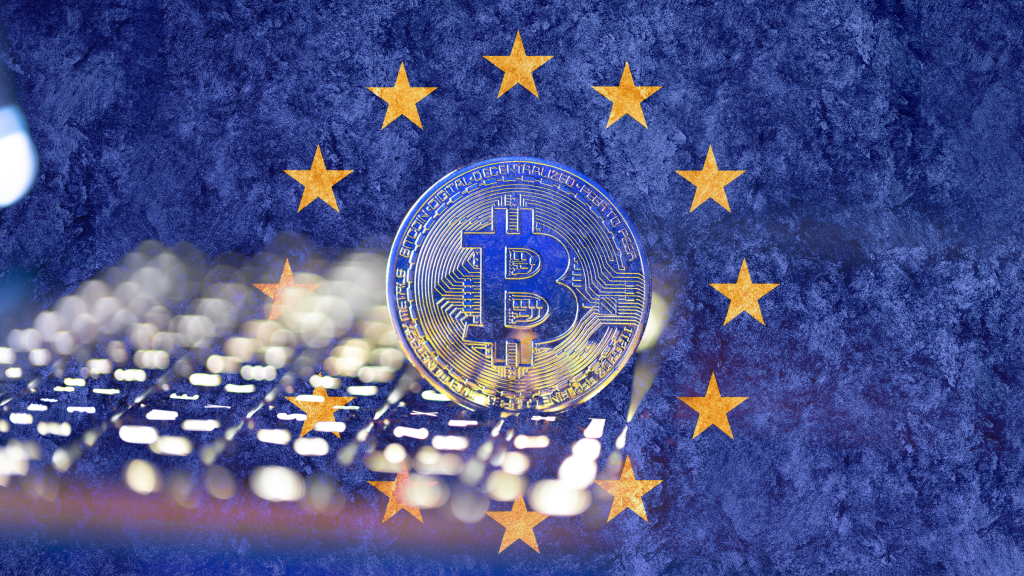
On May 20, European Commission officially launched an urgent public review of its Markets in Crypto-Assets (MiCA) regulation in Brussels to determine if the framework can handle tokenized deposits moving across international borders as crypto markets evolve.
The public review is a concession from an institution that spent three years developing one the world’s most advanced, and articulate, digital asset regulatory architecture, only to eventually watch its assumption become obsolete only two years after its implementation.
The sudden EU legislative intervention was triggered by competitive pressure from Washington and Wall Street, as they push into deposit tokenization that’s migrating traditional commercial banking onto blockchain networks.
The MiCA regulatory framework passed in the immediate aftermath of Futures Exchanges (FTX) collapse and was calibrated for volatile token markets and jurisdictional arbitrage. For JP Morgan, none of this was calibrated.
FTX collapsed and filed for Chapter 11 bankruptcy in the US on November 11, 2022, according to CoinDesk.
EU policymakers are inviting public and institutional feedback to try to reset their defensive legal shield to protect from forced American banking rules and non-EU payment providers that undermine Europe’s digital sovereignty.
In the EU, the compliance infrastructure strictly designed for cryptocurrency companies is fundamentally misaligned with the risk parameters, counterparty relationships, and systemic importance of the US-based Wall Street institutions that are just entering the digital assets market.
The EU built a cryptocurrency rulebook for the last crisis, but Wall Street just handed it a completely new one that will borderline dictate the digital asset management landscape.
The digital assets’ institutional appetite necessitates a complete re-evaluation of real-world asset (RWA) tokenization and deposit tokens – blockchain instruments through which global banks are beginning to move balance sheet exposure that MiCA’s developers did not anticipate at scale.
Now, the EU will need to repair its domestic laws to prevent the US dollar-backed tokenized deposits from conquering its own European banking sector, while using blockchain tracking tools to freeze the international assets of highly sophisticated global lobbies.
Adapting to Wall Street’s New Pipes
MiCA’s volume relies on stablecoins and is designed to prevent any single digital asset from achieving systemic dominance within the European financial system.
MiCA constrained euro-dominated alternatives, with caps effectively preserving the structural advantage of US dollar-backed assets at the exact moment Brussels is trying to assert its own digital financial independence.
Now, Wall Street is redirecting its attention toward deposit tokenization, and the EU has an even bigger reason to rewrite its rules and regulate traditional bank money moving on blockchain rails.
Regulators do not typically reopen flagship frameworks so quickly, unless they believe the market moved faster than expected, or geopolitical pressure is forcing adaptation. MiCA was originally developed when the industry experienced failures, and crypto markets appeared to policymakers as vectors of financial instability.
The regulation – originally meant to protect European infrastructure – is now actively contributing the further entrench and tighten the American grip on the EU’s financial market for digital assets, which it was designed to counterbalance.
European regulators initially approached crypto primarily as a high-risk speculative sector populated by offshore exchanges using fragmented EU licensing systems and insufficient KYC/AML controls.
When MiCA was written, the concept of a digital deposit living on a blockchain still sat at the edge of institutional markets. Today, large financial companies, including the parent company of the New York Stock Exchange (NYSE), have begun integrating blockchain infrastructure to issue native tokenized deposits as a part of the future plumbing of capital markets.
“The tokenization of real-world assets [has] long been a holy grail for crypto … making those real-world assets more accessible globally to consumers,” said Brett McLain, head of payments and blockchain at Kraken.
Because the US has been working to close the gap, recent guidance from federal regulators opens the door to products like deposit tokens that move across internal blockchains, regulated stablecoins backed by bank balance sheets and tokenized deposits that settle with the same confidence as traditional cash and securities.
When President Trump retook the reign of the American empire in 2024, his administration was quick to embrace a pro-crypto regulatory framework, inevitably accelerating Wall Street’s integration of distributed ledger technology into core banking infrastructure.
Crypto Industry Poured $238 Million into Trump’s 2024 Election
In the 2024 US presidential campaign, the digital asset sector was the single biggest source of corporate spending, pumping around $238 million into election efforts.
It’s worth nothing the digital assets sector exceeded the oil and pharmaceutical lobbies.
Coinbase and Ripple led the financial contributions, committing $49 million and $47 million, while the Fairshake Super PAC raised over $203 million, backing pro-crypto candidates, and President Trump was one of them.
Founders of Andreessen Horowitz, Marc Andreessen and Ben Horowitz, contributed $8 million combined. President Trump’s family crypto venture, World Liberty Financial, ran by the President’s sons Eric Trump and Donald Trump Jr., subsequently received a $2 billion Abu Dhabi backed investment.
EU’s Modern Financial Chaos
Europe is now stuck in the middle of a strategically competitiveness situation, as the advantages of distributed record technology allow American institutions to scale much faster than EU-based ones.
European commercial banks are falling behind in the race to deploy programmable money for automated cross-border business-to-business (B2B) transactions.
According to Christine Lagarde, president of the European Central Bank, a legitimate concern exists that risks entrenching dollar dependency due to the rising use of dollar stablecoins in Europe. All while the region continues to debate how a central bank digital currency programmable framework should be implemented.
French Finance Minister Roland Lescure urged European banks to develop more euro-based stablecoins to cut reliance on non-EU payment providers.
On Wednesday, news broke that Qivalis, the euro-pegged stablecoin initiative, gained 25 new bank backers, Europe lacks a unified standard for a programmable currency. This risks dividing its market while Wall Street uses tokenized deposits to dominate global liquidity.
Europe is leveraging blockchain oversight as a security weapon against international crime to protect its financial sovereignty.
On May 22, during the 8th EU-Mexico summit in Mexico City, Europe and Mexico established a security cooperation pact, turning crypto monitoring into a powerful diplomatic tool.
Yet, the problem of US pressure and market domination lingers in the background.
The eighth EU-Mexico summit opened a dialogue on global crypto money laundering. The objective is clear: better track suspicious digital flows between jurisdictions, especially when they serve transnational criminal networks.
The fight does not only target isolated fraudsters behind a few anonymous wallets; discussions also mention groups like the Sinaloa cartel, suspected of using crypto flows to launder funds internationally.
Additionally, this strategy is a response against growing American pressure, allowing both regions to find alternative economic payments.
Ultimately, Europe and Mexico now choose a more targeted approach by monitoring predators without burning the entire blockchain forest. Ultimately, these developments leave Europe trapped in a regulatory dilemma: can a region achieve true digital sovereignty through restrictive enforcement, or will its strict laws isolate it from the global expansion of deposit tokenization?
As commercial networks rapidly adopt programmable money to automate global trade pipelines, the EU’s defensive legal structure is being tested like never before. The primary advantages of distributed ledger technology -unparalleled transaction speed and mathematical transparency- are currently being weaponized by foreign jurisdictions.
If Brussels cannot find a way to adapt to bank-issued tokenized deposits and fast-moving international markets, it risks becoming irrelevant in a digital economy increasingly dominated by foreign programmable money systems and nimble global competitors.
Inside Telecom provides you with an extensive list of content covering all aspects of the Tech industry. Keep an eye on our Cryptocurrency section to stay informed and updated with our daily articles.
