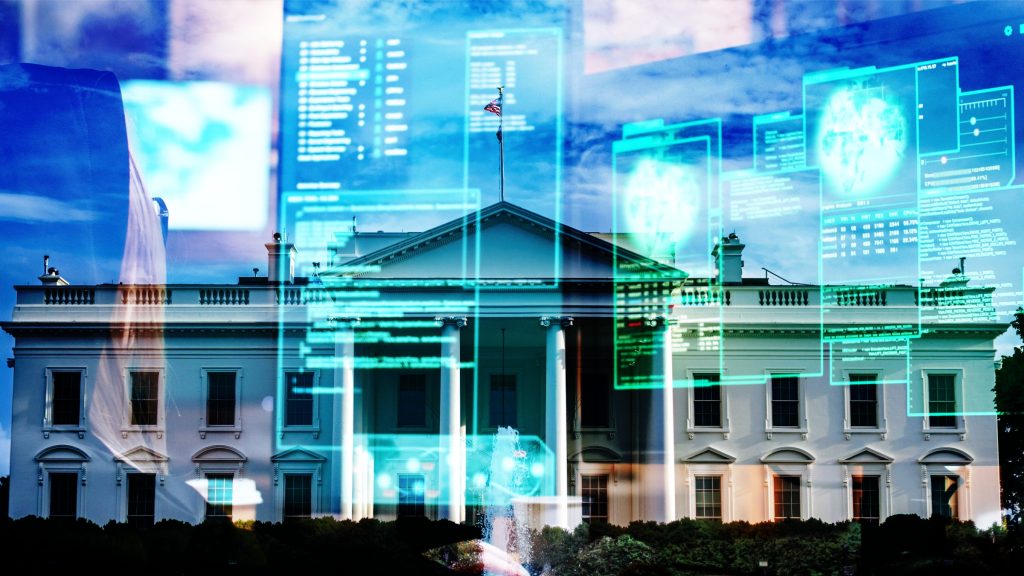
On Monday 23, White House AI policy approved a secret $9 billion request to help US spy agencies get advanced chips to close a critical hardware shortage that is pausing CIA’s and National Security Agency’s (NSA) operations.
The huge funding push coincides with an internal compromise. According to a report from the New York Times, White House Chief of Staff, Susie Wiles has authorized the NSA to continue relying on Anthropic’s advanced AI model Claude. This agreement was granted despite a formal Pentagon designation labeling the company a national security supply chain threat.
Additionally, the US government AI community is facing a stark reality, where the urgent operational need for frontier intelligence tools has temporarily overridden strict supply-chain restrictions, leaving no option but to seek Anthropic’s products to not let foreign adversaries like China take advantage.
White House AI and Global Hardware Bottleneck
The shortage of advanced chips has been taken very seriously within the intelligence community in recent months. The interesting part is that American intelligence companies cannot run the newest AI because they don’t have the hardware.
The Pentagon originally blacklisted Anthropic after a fierce dispute over the company’s ethical guardrails, refusing to lift its internal restrictions against mass domestic surveillance or fully autonomous lethal weapons.
This clash ended in an extensive way where Trump orders federal agencies to stop using Anthropic AI tech.
CIA and the NSA spies are under intense pressure to deploy generative AI to sift through massive amounts of intelligence, a critical process for uncovering overlooked electronic communications intercepts, satellite images and analyzing battlefield data. However, the computing demands of these modern models have far outpaced what defense experts anticipated, leaving NSA AI unable to fully test or run the newest systems on their isolated networks.
“Our intelligence community needs the frontier — the best AI chips, models, systems, talent — on a timeline that matches the threat,” said Vinh Nguyen, the former chief data scientist at the NSA and a senior fellow on AI at the Council on Foreign Relations.
On the other hand, the internal shortfall has also been worsened by geopolitical tensions and shifting trade policies. Strict export regulations have the AI industry struggling against a high global demand for semiconductors, like the Trump administration’s bans preventing Nvidia’s chips from being exported to China.
For the White House AI funding, which historically failed to allocate enough money to structure specialized computing facilities, these combined global shortages and trade restrictions have severely limited AI adoption in federal agencies.
Will the Intelligence Community A Secure Supply Chain?
The US government AI fundings efforts are shaking the industry, as the situation remains uncertain, a question repeats: will the intelligence community – NSA and CIA- secure a supply chain to keep digitalizing the tech framework of their agencies?
The NSA and CIA run their classified AI models within dedicated, top-secret cloud networks; primarily managed through specialized government cloud upgrades like Amazon Web Services’ $50 billion modernization initiative.
Any shortage especially in Nvidia’s Grace Blackwell superchip is a challenge for the most important US national security agencies at a time when AI tools play big role in daily operations of the military.
Because unclassified facilities cannot simply be renewed for top-secret operations, the government is looking up to the new $9 billion requested White House AI funding to boost the availability of infrastructure for Nvidia’s latest Grace Blackwell superchip.
These facilities are engineered with massive electrical frameworks and custom liquid cooling systems, ensuring the physical infrastructure remains entirely hidden and self-contained within secure military and intelligence perimeters.
While these long-term data centers are being constructed, the intelligence community remains heavily reliant on the Anthropic US government relationship to bridge the operational gap.
Anthropic’s newly developed model, Mythos, possesses unparalleled cybersecurity capabilities. Its ability to autonomously find and navigate digital vulnerabilities was so powerful that it was restricted from public release.
Crucially for a hardware-starved government, Mythos is highly efficient and capable of running on previous-generation chips, serving as one of the few viable AI solutions for federal agencies. To secure this channel safely, White House AI community and Anthropic are finalizing a classified contract that strips out broad military use ensuring the AI cannot be used on Americans’ data.
By combining these highly efficient models with restricted, physically separated data networks, US spy agencies are aiming to bypass the immediate chip shortage while keeping their White House AI operational footprints entirely dark to foreign adversaries.
Inside Telecom provides you with an extensive list of content covering all aspects of the tech industry. Keep an eye on our Intelligent Tech sections to stay informed and up-to-date with our daily articles.