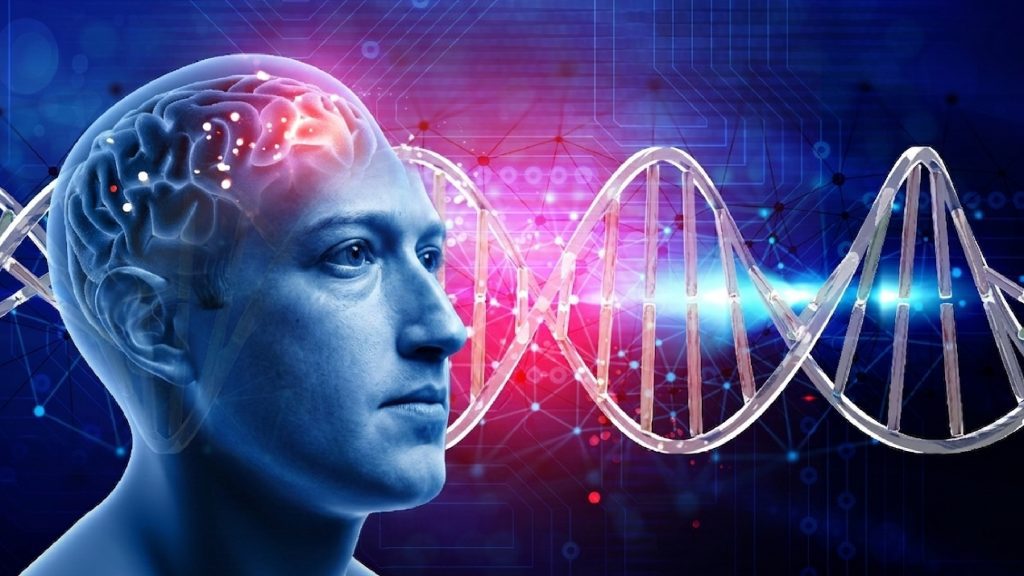
Meta CEO, Mark Zuckerberg, and his wide Priscilla Chan, are pouring $500 million into a new AI engineering biology initiative through Chan Zuckerberg Biohub, as Silicon Valley accelerates efforts to use AI to decode human cells and reshape how diseases are studied and treated worldwide.
Announced last week by Biohub, the five-year initiative will create predictive AI models capable of engineering biology behavior of human cells digitally.
According to the organization, the datasets and technologies developed through the project will remain open and freely available to researchers globally, to expand collaboration across the life sciences industry and support the future of synthetic biology.
Biohub believes AI simulations could eventually allow scientists to test diseases, predict cellular behavior, and identify treatments at a speed impossible through conventional laboratory methods, strengthening the rise of AI synthetic biology.
Biohub plans to spend $400 million on internal research while allocating another $100 million to outside researchers and institutions. Partners in the initiative include Nvidia and several major research organizations, many of which are already investing heavily in biotechnology and synthetic biology research.
In a statement announcing the project, Biohub’s head of science, Alex Rives, stressed the scale of the challenge facing scientists working on engineering biology systems.
“To build artificial intelligence that can accurately represent the full complexity of biology and accelerate scientific research, we need orders of magnitude more data than exists today,” said Rives.
AI Going Deeper into Biology
The initiative is part of a broader transformation underway in the healthcare and biotechnology sectors, where companies increasingly believe large-scale biological datasets can train AI systems to uncover the advantages of synthetic biology.
Alphabet subsidiary Isomorphic Labs is already developing AI systems for drug discovery, while Microsoft has released multiple healthcare-focused AI models targeting genomics, clinical records, and future synthetic biology development.
Meanwhile, Nvidia’s BioNeMo platform is helping life sciences firms accelerate AI-based drug development while pushing deeper into biotechnology and synthetic biology innovation.
Still, one major obstacle remains: data.
Scientists do not yet know how much biological information is needed to build accurate predictive cellular models. Biohub acknowledged that a far larger global scientific effort will be required before such systems can reliably simulate the complexity of living cells.
“We need new technologies to observe the cell, from the molecular to the tissue level, and in the context of health and disease,” Rives added describing the next stage of engineering biology research.
Future Applications of Synthetic Biology
The complexity of the human cell partly explains why technology firms are investing so heavily in computational biology. Although a single human cell measures roughly 0.05 millimeters across, scientists estimate it contains billions of proteins, trillions of molecules, and countless biochemical interactions for AI synthetic biology.
That microscopic complexity was famously visualized by scientific animators Evan Ingersoll and Gael McGill, whose detailed digital rendering of a eukaryotic cell became widely recognized for illustrating the dense molecular activity occurring inside living systems and inspiring the future of synthetic biology.
“This 3D rendering of a eukaryotic cell is modeled using X-ray, nuclear magnetic resonance (NMR), and cryo-electron microscopy datasets for all of its molecular actors,” explained McGill.
Inspired partly by the work of computational biologist David Goodsell, the educational visualization highlighted the extraordinary complexity researchers who are now attempting to model using AI as companies explore synthetic biologics and advanced medical therapies.
As AI companies increasingly move beyond chatbots and into biology, healthcare, and pharmaceutical research, human cells are rapidly becoming one of the technology industry’s most ambitious new frontiers, reinforcing how biotechnology and synthetic biology is coming together.
Inside Telecom provides you with an extensive list of content covering all aspects of the tech industry. Keep an eye on our Intelligent Tech sections to stay informed and up-to-date with our daily articles.