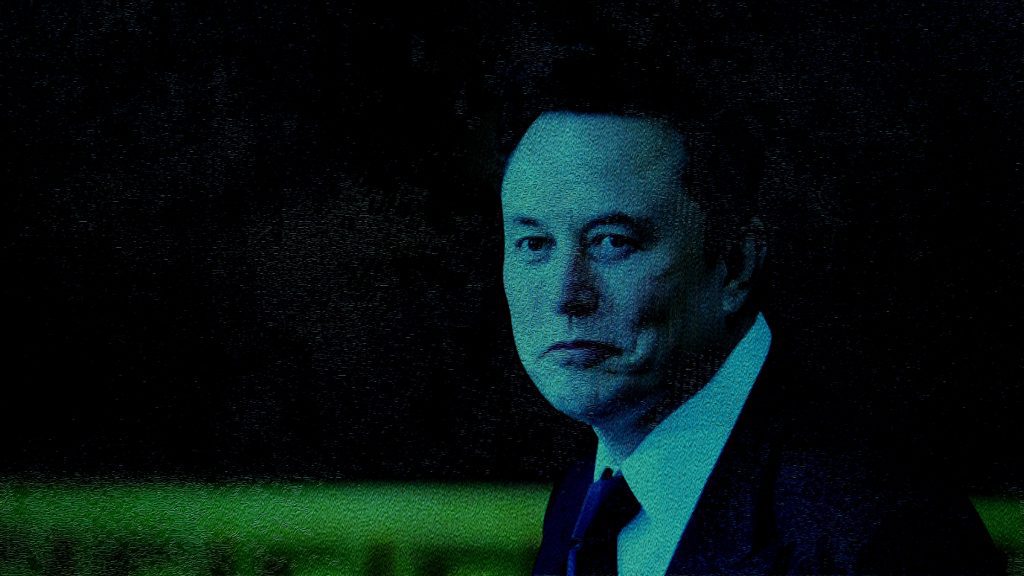
On April 28, in the ongoing Elon Musk lawsuit against OpenAI, the Tesla CEO testified in Oakland courtroom, accusing OpenAI leadership of betraying their founding mission as company shifted to a for-profit structure, deeming it as a not so necessary evolution but a calculated disloyalty.
Discussion surrounding the Elon Musk OpenAI lawsuit focused on whether Sam Altman’s shift was an intentional move to pivot from their core mission, or a necessary step for survival in a highly competitive world.
When Elon Musk took the witness stand in the federal courtroom, he basically said – with characteristic economy – what his $134 billion lawsuit has been arguing for months in the more measured language of legal filings.
“If we make it OK to loot a charity, the entire foundation of charitable giving in America will be destroyed,” Musk said during the first day of the trial, adding, “that’s my concern.”
In Leeman’s terms, Musk is simply saying it’s not okay to steal money from charity. And in his eyes, that’s what OpenAI’s board and CEO, Sam Altman, ended up doing.
Was OpenAI’s as a non-profit pivot a betrayal of its core mission, or does the pursuit of artificial general intelligence (AGI) inherently demand closed-source, high-capital systems, rendering the early nonprofit promises unsustainable? And does all that justify the “looting of charity,” as Musk so eloquently put it.
Musk Altman Feud
In 2019, OpenAI restructured from a pure non-profit into a capped-profit entity – hybrid model that allowed outside investment while theoretically limiting financial returns to early backers.
As of time of writing, OpenAI is valued at $852 billion.
In essence, the gap between the ChatGPT parent company’s almost $900 billion valuation and the charitable mission stated on OpenAI’s founding documents is really what this trial is being asked to explain.
In the eye of Elon Musk’s legal team, OpenAI’s restructuring is framed as straightforward misappropriation.
In the eyes of Open AI CEO, Sam Altman, and co-founder and President, Greg Brockman, both argue that taking an institution endowed with donor capital and reorienting its equity toward a circle of executives and corporate investors is not a bad thing. For both co-founders, they effectively privatized a public asset, nothing more – with Microsoft as the primary beneficiary, at the time.
He insists that as one of Elon Musk lawsuits meant to protect the public interest, the case is about ensuring that technology remains a steward for humanity rather than a wealth machine. However, the defense paints a drastically different picture, arguing that the pivot was not a betrayal, but an essential step to keep pace with industry leaders like Google.
Throughout the trial, OpenAI’s defense team rested on necessity with lawyers arguing that competing with Google’s AI models requires computational infrastructure of a scale that no non-profit balance sheet could sustain.
Developing advanced AGI requires massive computing power and capacity to hire the world’s most capable scientists to lead in competitiveness.
From their perspective, the Elon Musk OpenAI for-profit lawsuit fails to acknowledge that a traditional nonprofit structure simply lacked the financial engine needed to push the boundaries of what is possible in today’s landscape.
OpenAI’s board and executives see the pivot from non-profit to privatized commercial structure as a means of survival, not betrayal. The company’s legal team contended that it was the only available mechanism for mobilizing the capital required to remain relevant in the AI race with civilizational stakes.
A Clash of Perspectives
The federal court OpenAI and Musk proceedings are currently highlighting the deep-seated dispute between Tech titans that has defined this transition. Although Musk portrays his Elon Musk OpenAI for-profit lawsuit as protecting the values of philanthropy, the counterargument reveals an individual who was unable to let go of control of something he had built.
Musk’s lawyers have argued that Elon Musk OpenAI for-profit lawsuit is a tactic way to destroy his rival, considering that he is actively involved in the same industry.
“What he cares about is Elon Musk being on top,” lawyer Bill Savitt said in his opening statement. “We are here because Mr. Musk didn’t get his way.”
In addition, he emphasized the Elon Musk OpenAI Sam Altman lawsuit as an unnecessary step when one failed to get what he wanted. Throughout the testimony, the court is trying to recognize whether the idea of a nonprofit lab could ever have been in line with the pressure of urgency of building AGI.
Even before judges were seated, US District Judge Yvonne Gonzalez Rogers had to admonish Musk after OpenAI lawyers complained about his posts on X, in which he mocked Sam Altman as “Scam Altman” and accused him of stealing a charity.
Musk is seeking $150 billion in damages from OpenAI and Microsoft, with proceeds destined for OpenAI’s charitable arm, while also demanding that OpenAI revert to a nonprofit and remove Altman and Brockman from their leadership roles.
The OpenAI Sam Altman Elon Musk lawsuit highlights the complex realities of AI development. It will be up to the future generation whether such development necessitates going back to nonprofit foundations as seen in the Elon Musk OpenAI lawsuit or if it will require following the more expensive route.
The Elon Musk lawsuit might decide whether the high-pressure, for-profit scaling of AI will be the new benchmark for all subsequent lawsuits.
Inside Telecom provides you with an extensive list of content covering all aspects of the tech industry. Keep an eye on our Tech sections to stay informed and up-to-date with our daily articles.