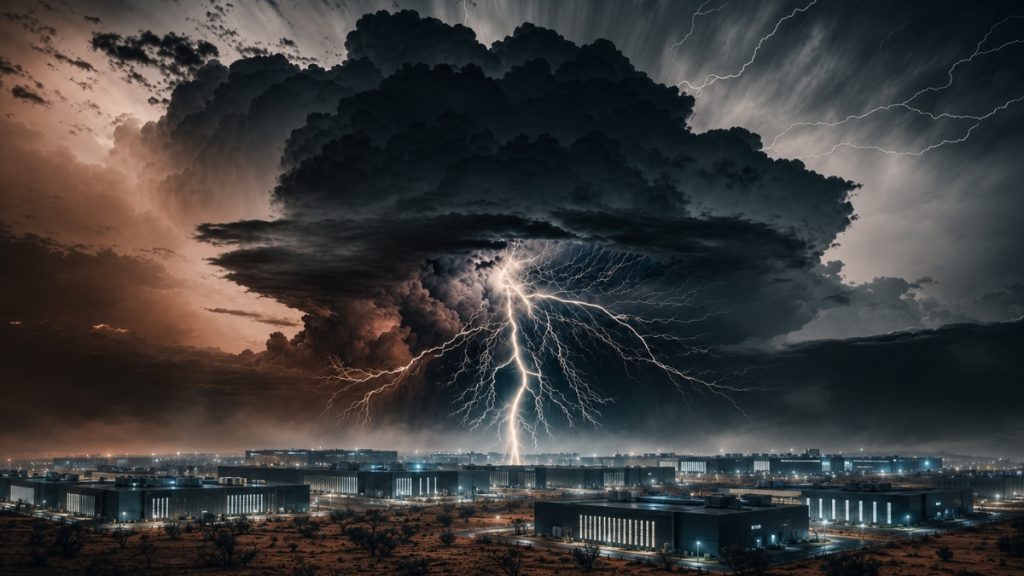
As Europe’s heatwave strains power grids and cooling systems, the AI data centers climate change problem is growing harder, raising questions about whether infrastructure built for digital growth can survive rising climate risks, insurance pressure, and extreme weather without losing reliability.
The concern is no longer limited to energy demand or water use. Heatwaves, floods, wildfires, extreme winds, and drought are now moving into the center of AI infrastructure planning, as insurers, operators, and climate risk analysts warn that data centers are being built in places where the physical environment is becoming less predictable.
AI Data Centers and Climate Change
Across Europe’s, heatwave risks exposed how deeply digital infrastructure depends on stable power, cooling, and surrounding utilities.
When heat drives air-conditioning demand higher, power grids can become overloaded, increasing the risk of blackouts that may hit factories, nuclear plants, and AI data centers climate change at the same time.
For the AI data centers climate change, the pressure is sharper. Advanced chips need continuous cooling, and any disruption can affect uptime, repair costs, and customer service. Over the past three years, severe weather has become the leading cause of loss in Zurich’s US data center builders’ risk portfolio, driving one-third of the company’s losses.
Head of International Construction at Zurich Patrick McBride said, “Severe weather is no longer something that can be treated as a background exposure.”
That AI data centers climate change warning comes as data centers move beyond traditional hubs into suburban, rural, and frontier markets where land is cheaper, but climate records may be weaker. McBride said 64% of data center capacity under construction this year is outside established hubs such as Northern Virginia, with new projects rising in West Texas, Tennessee, Wisconsin, and Ohio.
These areas may offer space and lower costs, but they also bring tornadoes, hail, high winds, and exposure across large roofs, cooling systems, solar installations, and energy equipment. In Europe, data center expansion is also moving toward warmer areas such as the Iberian Peninsula, where rising temperatures could add pressure on cooling and grid stability.
CEO and co-founder of Rhizome Mishal Thadani said, “Extreme heat stresses data centers and the grid they rely on at the same time.”
He added that cooling can make up around 40% of a data center’s energy use under normal conditions, and that figure rises during heatwaves, exactly when the wider grid is already under pressure from air conditioning.
“Data centers need the most energy exactly when the grid has the least available to give,” Thadani said.
Insurance Pressure Moves into the AI Buildout
The AI data centers climate change risk is not only operational. It is also financial. A First Street report found that 79% of global data center capacity faces elevated risk from acute climate hazards, including flooding, extreme winds, and wildfires. These threats can disrupt service, increase downtime, and push up insurance and repair costs.
First Street also found that chronic climate stress, including extreme heat and drought, affect more than half of global data center markets. Asia-Pacific carries the heaviest exposure, with acute risk touching 89% of its data center capacity, compared with 50% in the Americas and 46% across Europe, the Middle East, and Africa.
The Cross Dependency Initiative reached a similar conclusion in its 2026 Global Analysis of Planned Data Centres for Physical Climate Risk and Resilience. The report examined 2,595 planned data centers worldwide and found that 154 are already classified as high risk for physical climate damage under low-resilience construction settings.
Founder and Head of Science and Technology at XDI Dr Karl Mallon said, “The question is no longer simply where the next generation of digital infrastructure gets built, but whether those assets can remain operational, insurable and economically resilient over their intended life.”
That question matters because data center climate change often operate for two to three decades. A site selected today may still be exposed to climate, grid, and insurance pressure into mid-century.
XDI also warned that data centers cannot be assessed alone. Their ability to operate depends on power grids, water systems, roads, telecom networks, and supply chains. In Europe, the report found that disruption risk increases ten-fold when surrounding infrastructure is included.
Microsoft said it designs its AI data centers climate change to operate reliably across different environmental conditions, using site selection, redundant systems, and real-time monitoring. Nvidia has also said its new AI servers can run cooling liquid at 45 degrees Celsius, helping reduce cooling costs.
But the broader message is clear, AI infrastructure is no longer just a race for chips, land, and power. It is becoming a test of climate resilience.
Inside Telecom provides you with an extensive list of content covering all aspects of the tech industry. Keep an eye on our Intelligent Tech sections to stay informed and up-to-date with our daily articles.
