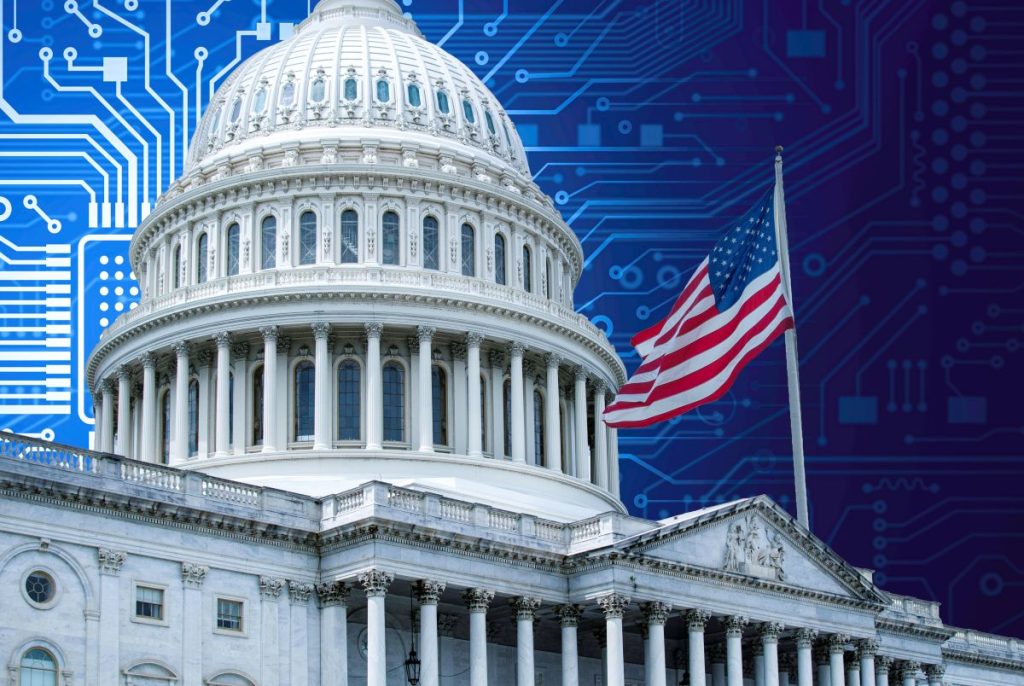
On September 29, President Donald Trump launched America.gov in Washington, providing Americans a new example of government AI chatbots like ChatGPT to search federal information. Can one model shape public access to official information? It seems that’s what the current administration is aiming for.
When America.gov launched at a ceremony in Washington, President Trump described it as a “unified digital front door” to federal services.
What America.gov Means for Americans
Powered by Google’s Gemini and Musk’s xAI’s Grok, America.gov is built by the White House’s National Design Studip, and run by the General Services Administration.
Instead of sending people through agencies and complicated websites, America.gov offers a single conversational interface, and draws answers from 29,000 federal websites and 800 million pages, providing sourced responses and next steps for tasks like applying for a passport, enrolling in Medicare, or renewing a vehicle registration.
The government AI chatbot makes federal information easier to reach, especially for users who don’t know which agency handles their request.
What changes with President Trump’s announcement, however, is not only the interface but the extent in which generative AI in US federal government is rising, where software can now decide how official material reaches US citizens before opening the original government page.
President Trump compared the tool directly to Grok, Gemini, and ChatGPT, telling the launch audience, “with America.gov the entire US government will fit in the palm of your hand.”
One AI Door Into Thousands of Government Sources
President Trump presented America.gov at its launch as a simpler route into federal services, in the administration’s push toward AI chatbots for government becoming the public-facing entry point to agencies rather than a secondary tool.
“With America.gov, the federal government no longer stands in your way, and it stands only at your service. And that’s what we’re doing. We’re simplifying it. We’re glamorizing it. We’re making it what it should be,” said President Trump.
According to Joe Gebbia, US Chief Design Officer, behind that simple chat window sits a much larger information system. America.gov was trained using material from roughly 29,000 government websites
At that scale, government AI chatbots like ChatGPT do more than locate pages. They compress thousands of sources into one response.
“Don’t think of it as a website; it’s more of a conversation that you start with the government to try to get access to the answers you need,” said Gebbia.
For US citizens, that could remove a major barrier. Federal government chatbots could allow someone to begin with a simple question about Medicare, student loans, passports or address changes without first understanding which department controls the service.
Jessica Ji, a senior research analyst at Georgetown University’s Center for Security and Emerging Technology, said the familiar interface could be useful for people who do not know where to begin. Her point helps explain why AI chatbots for government may improve access even if traditional agency websites remain in place.
“I can see it being quite useful as a landing page for people trying to navigate specific systems and not knowing where to start,” said Ji.
Convenience, though, creates a new dependency. Once the Trump administration AI models sit between citizens and public records, users are no longer interacting only with government information.
They are also interacting with the model’s interpretation of that information.
Choosing the best government chatbot for federal and state agencies, therefore, is not simply a question of speed or ease of use. A system could answer quickly and still leave important questions about source selection, hidden instructions, and the limits placed on certain responses.
Who Governs the Interface?
Early testing already shows why those questions matter. Reports found that America.gov sometimes gave different responses to politically sensitive prompts.
With government AI chatbots like ChatGPT, that inconsistency raises a deeper issue: citizens may not know whether an answer changed because the underlying information changed, because the model made an error or because its internal rules guided it elsewhere.
That distinction matters more than a typical chatbot mistake. AI chatbot misinformation may come from hallucination, but a selective response can result from developer instructions, safety rules, or filtering systems.
Model behavior can therefore become a form of administration in its own right. As Trump administration AI models mediate access to federal information, changes made behind the interface can alter how citizens experience government even when the official agency pages themselves remain untouched.
Seen from that angle, governing misinformation in everyday knowledge commons is no longer an abstract policy debate, and slowly it begins to influence how public knowledge is structured.
Greater use of generative AI in US federal government will make that responsibility harder to separate from traditional public administration. America.gov is expected eventually to move beyond answering questions and help users’ complete government processes.
President Trump said conversations would remain private, while the administration has presented privacy and security as core features of the platform.
“It’s basically impossible to tell what those weaknesses are before they are discovered,” Ji said back.
Once government AI chatbots like ChatGPT begin handling private information or act directly for users, the balance changes again. A wrong answer may create confusion, but a wrong action could affect an application, renewal or access to a public service.
“When this kind of AI system is empowered to handle private data and actually take action on users’ behalf, I think you are increasing the attack surface quite a bit,” Ji said.
Moving toward a generative AI federal government therefore creates a problem that is partly technical but increasingly institutional. The challenge is not simply whether the AI can retrieve correct information.
It is whether the rules governing retrieval are visible, accountable, and consistent enough for a system to perform public functions.
A government AI chatbot may look like a cleaner replacement for fragmented federal websites, yet the simplicity of the interface can hide greater complexity underneath. Source ranking, model instructions, refusal rules, and security controls all shape the final answer before the user sees it.
That is where America.gov becomes more than another government technology project. Government AI chatbots like ChatGPT can concentrate thousands of websites, agencies and decisions into a single conversational layer.
Whoever controls that layer can influence how government information is filtered long before citizens reach the source.
Then, the deeper risk is not simply that the system might hallucinate, but that AI could become part of governmental machinery without citizens seeing where public information ends, and model judgment begins.
Inside Telecom provides you with an extensive list of content covering all aspects of the tech industry. Keep an eye on our Intelligent Tech sections to stay informed and up-to-date with our daily articles.
