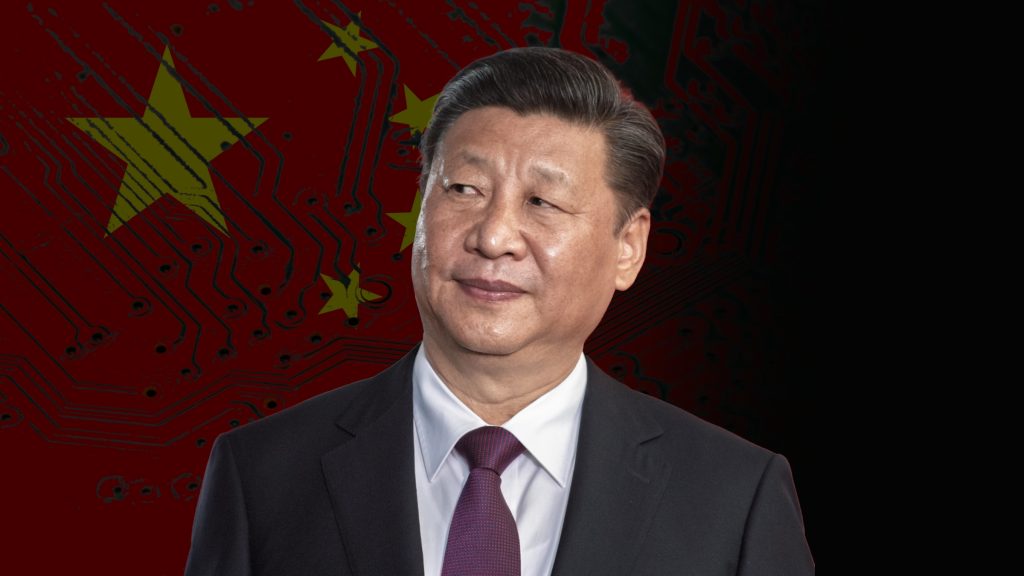
China’s State Council in Beijing has introduced new regulations requiring technology companies to obtain national security approval before moving operations, data, or investments abroad, tightening China regulation state control over cross-border activity amid rising tensions with the US and Europe.
Under regulations issued by China’s State Council, companies will now need national security approval before shifting capital controls operations overseas or complying with certain foreign legal orders, expanding Beijing’s ability to block investment flows and force capital repatriation.
As Charles Austin Jordan of Rhodium Group says, “State intervention – and the injection of politics and security into the economy – is trending up in China.”
Fortress Around Chinese Tech
Beijing’s new framework, including national security screening for outbound investment, is designed to slow the flow of capital and technology leaving China regulation as tensions intensify with the US and Europe.
The State Council rules follow earlier measures allowing intervention in supply chain relocations, signaling a broader shift away from decades of open-market globalization toward state-managed economic security.
He said, “We’ve moved away from a world where laws made it easier to allow the flow of capital, people, technology and trade to go around.”
The China regulation shift shows the fragmentation of the once-integrated “Chimerica” vision of global trade. Authorities have already shown willingness to intervene in high-profile deals involving foreign-linked AI assets, signaling tighter scrutiny over cross-border expansion.
Titans Under Political Tightening
The capital controls have already reshaped China’s private sector, affecting company’s such as Alibaba and earlier episodes involving founder Jack Ma, whose political rehabilitation once signaled a temporary détente with Beijing.
More recently, Beijing blocked a $2 billion merger involving Meta and Chinese-owned Manus AI platform, a move widely seen as reinforcing tighter control over cross-border tech expansion.
“If you’re a private Chinese tech entrepreneur with global dreams, there isn’t much cause for optimism at the moment,” said Jordan.
Analysts warn that expanded controls could accelerate financial decoupling, with consequences for investment flows, asset valuations and market access across both China and Western economies.
The new regulatory regime also imposes continuous compliance requirements on overseas investments, signaling that company’s must repeatedly demonstrate alignment with state priorities.
While some Chinese commentators argue the rules provide clarity, critics suggest they risk weakening long-term innovation by discouraging global expansion.
By weaponizing investment and tightening capital controls, Beijing may gain leverage in geopolitical disputes but could also deepen global market fragmentation.
Start-up founder Xiao Hong, whose company Butterfly Effect expanded its AI products including Manus, shifted operations to Singapore in 2025 to reduce geopolitical risk and attract international investors. That move reportedly helped ease concerns in Washington and positioned the company for potential partnerships abroad, including Meta’s $2 billion interest in Manus before China regulation intervened.
Beijing’s veto on the Meta-Manus deal demonstrated a more assertive regulatory posture.
Beijing will actively shape which foreign partnerships Chinese AI companies can pursue. Industry analysts say perceive pattern as accelerating a broader decoupling trend, where China’s tech ecosystems in its mainland and the West evolve under separate regulatory and financial systems.
Together, these measures reflect Beijing’s strategy of building economic resilience and bargaining power, even as it risks limiting the global reach of its most innovative companies. At the same time, executives warn that heavier compliance and approval requirements could slow overseas expansion at a moment when global competition in AI is intensifying rapidly.
Ultimately, the tightening grip shows a new era in which economic policy, national security, and technology strategy are becoming inseparable in the China regulation.
Inside Telecom provides you with an extensive list of content covering all aspects of the tech industry. Keep an eye on our Tech sections to stay informed and up-to-date with our daily articles.