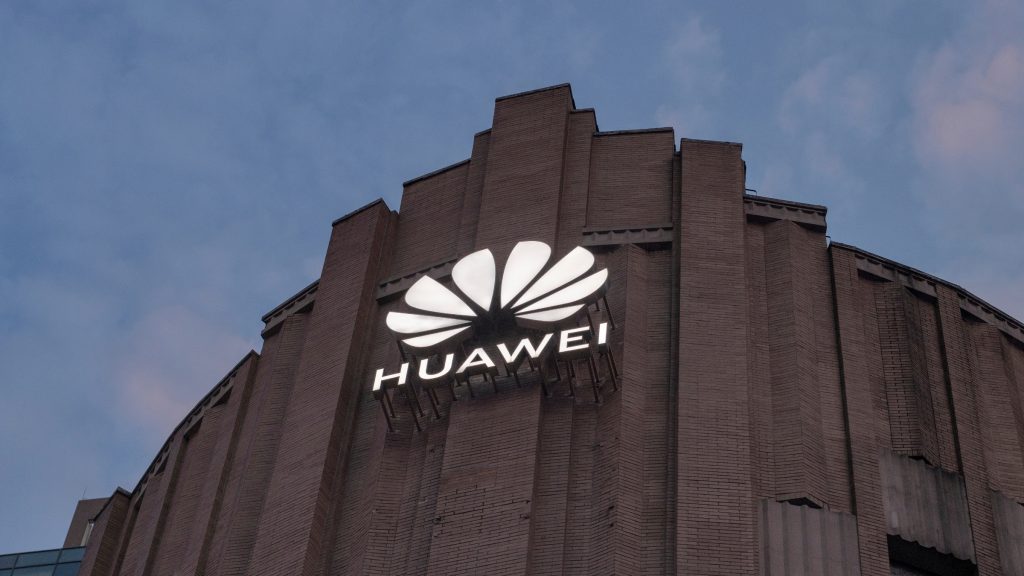
The push to get Huawei banned in Europe, as well as ZTE from telecom networks, could protect infrastructure, but operators warn the policy may cost up to $45.63 billion (€40 billion), delay 5G investment, raise equipment prices, and widen the gap between richer and smaller markets.
The EU Huawei ban is no longer only about whether Chinese suppliers create security risks but is becoming a test of who can afford Europe’s digital sovereignty, and how quickly operators can replace working systems. It became a matter of whether smaller markets will pay the highest price for rules designed in Brussels.
Security Comes with a Bigger Bill
GSMA, representing the global telecom industry, estimates that removing equipment from suppliers classified as high risk and the European operators between $34.22 billion (€30 billion) and $45.63 billion (€40 billion), following the decision of Huawei banned in Europe.
That figure is far above the European Commission’s estimated $3.88 billion (€3.4 billion) to $4.90 billion (€4.3 billion) annually for three years, or roughly $11.41 billion (€10 billion) to $14.83 billion (€13 billion) in total.
According to the industry body, Huawei banned in Europe decision has vendors going from mobile networks alone could cost between $18.25 billion (€16 billion) and $25.10 billion (€22 billion). Fixed networks could add another (€5 billion), while transport networks may require between $10.26 billion (€9 billion) and $13.68 billion (€12 billion).
To ban Chinese telecom equipment means costs wouldn’t end with replacement work, as GSMA also expects reduced competition among equipment makers to add around $9.69 billion (€8.5 billion) to network investment costs between 2027 and 2030.
With fewer suppliers competing for contracts, operators could face higher prices while trying to fund EU 5G hardware expansion, fiber upgrades, and future network capacity.
According to GSMA’s report, “The Cost of Removing Designated Third-Country Vendors from EU Telecoms Networks,” “Mandatory removal of [high-risk vendor] equipment would impose substantial direct costs on operators, reduce competition in network equipment markets and likely slow the development of Europe’s digital infrastructure.”
This is where cybersecurity policy meets an EU telecom equipment wider issue.
Operators already argue that strict EU 5G hardware regulation, fragmented markets, and weak returns have limited investment.
Replacing functioning Huawei or ZTE telecom equipment ban within tight deadlines could force them to move money away from new coverage and into removing systems that may still have years of useful life.
Larger groups in Germany, Italy, and Spain may be able to absorb more of that Huawei banned in Europe cost.
Smaller operators and markets with lower revenue could struggle. Consumers may then face slower EU 5G hardware deployment, fewer network upgrades, or higher prices as telecom companies try to recover spending.
Disputed Price for Digital Sovereignty
Not everyone accepts the GSMA’s calculations, as critics argue some equipment would have been replaced during normal upgrade cycles, meaning the true extra cost could be much lower.
“GSMA estimates are gross, not incremental,” said director at think tank European Centre for International Political Economy (ECIPE), Hosuk Lee-Makiyama., arguing that deducting replacement costs that would have happened anyway could bring the total closer to the Commission’s estimate.
Telecom analyst John Strand also challenged the industry’s Europe ban Huawei position.
Lee-Makiyama believes operators made a calculated choice when they continued upgrading 4G networks to 5G with equipment from suppliers already considered risky under Europe’s voluntary 5G security toolbox.
“We find it very difficult to understand how, from a security policy point of view, in 2026 you can go out and defend the use of equipment from high-risk vendors,” Strand said.
The toolbox was introduced in 2020, but its voluntary nature led to uneven adoption across EU member states. The revised Cybersecurity Act would make its measures mandatory and extend them beyond mobile systems to fixed infrastructure for the first time.
Under the proposal, technology from unnamed high-risk foreign suppliers, widely understood to include EU bans Huawei and ZTE, would have to be removed from member states’ communications networks within three years after the law takes effect. The Commission says the measure is needed to protect supply chains, reduce fragmentation, and strengthen resilience across critical sectors.
The package also gives European Union Agency for Cybersecurity (ENISA) a more foundational role in certification and risk management across 18 critical sectors.
Brussels presents certification as a voluntary compliance tool, but operators remain concerned that powers, tight schedules, and unclear implementation rules could produce extra costs before benefits appear.
Yet, a single deadline could affect countries differently, with Strand estimating that more than 55% of equipment requiring replacement is concentrated in Germany, Italy, and Spain, while around 30 networks still depend on high-risk vendors for 35% to 100% of their radio access systems.
EU bans Huawei, therefore, faces two risks at once. Keeping suppliers viewed as unsafe may expose networks to espionage, disruption, or political pressure. Removing them too quickly may weaken investment, narrow supplier choice, and slow infrastructure development.
The question isn’t’ whether the EU bans Huawei and ZTE eventually should protect its networks. It is whether policymakers can design a transition that protects security without turning sovereignty into a cost only the largest operators and richest markets can carry. Without flexible timelines, targeted support, and realistic upgrade plans, Europe may secure its networks while leaving parts of its digital economy lagging behind.