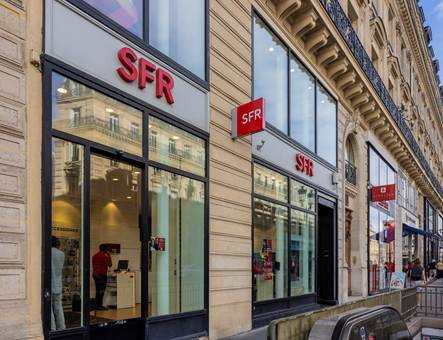
On June 6, Orange, Bouygues Telecom and Iliad agreed to buy and divideSociété Française du Radiotéléphone (SFR) in France through a $23.28 billion (€20.35 billion) deal, placing consolidation in European telecom market under national review as regulators closely examine prices, investment claims and competition risks.
France’s competition authority will lead the scrutiny of the transaction, which would transfer much of Altice France’s SFR business to three existing rivals.
The review will test whether Europe is becoming more open to telecom consolidation while still protecting subscribers from higher prices, weaker choices, and coordinated behavior within telecom consolidation Europe.
National Deal with European Consequences
The proposal is not a conventional takeover by one buyer but falls under the scope of telecom mergers and acquisitions.
Orange, Bouygues Telecom, and Iliad’s Free would split SFR’s customers, infrastructure and business services, potentially leaving France with three leading mobile network operators instead of four in a more consolidated telecom market.
That structure makes the consolidation in the European telecom market much harder for regulators to assess.
Regulators must assess not only the final market but also the transition, including how customer accounts, commercial data, networks and enterprise contracts would move between competitors within a consolidated telecom network.
Any temporary vehicle holding SFR assets during the division could also attract attention if it creates space for information sharing or coordination.
The deal is tied to Altice owner Patrick Drahi’s effort to reduce debt and simplify his telecom holdings amid wider mergers and acquisitions in telecom sector.
For the buyers, SFR offers customers network capacity and business operations that could strengthen their positions after years of pressure on margins and support a more consolidated telecom structure.
Yet the central question in telecom consolidation Europe is whether greater scale would support investment without weakening competition.
Operators argue that Europe’s fragmented telecom market limits the returns needed for fibre, 5G, cybersecurity and artificial intelligence infrastructure.
They also say consolidation in the European telecom market would leave larger operators better prepared to fund future networks.
“This is more than just another deal. It will test the EU’s current, evolving approach to merger control,” said French Renew lawmaker, Stéphanie Yon-Courtin.
Yon-Courtin’s warning addresses a broader policy shift in Brussels, with the European Commission President, Ursula von der Leyen, ordered updated merger guidelines after French and German political and business leaders. Leyen criticized the 2019 decision blocking the Siemens-Alstom railway merger.
Former Prime Ministers of Italy, Mario Draghi and Enrico Letta, both authored influential EU competitive reports – Draghi’s 2024 report on EU competitiveness and Letta’s on the single market – have since pushed for more permissive consolidation policies and telecom mergers and acquisitions as one route to stronger European competitiveness.
Consumers Carrying Heavy Burdens
Despite that political momentum, consolidation in the European telecom market, particularly through four-to-three deals, has traditionally faced strong resistance because fewer operators can reduce price pressure.
French competition chief Benoît Cœuré has said such a reduction is not automatically illegal, but his authority will examine subscription prices, regional network quality and the risk of coordinated conduct.
Cœuré warned, “If it is a four-to-three merger in mobile telecom services, then it will, of course, raise competition concerns because it’s our job to protect consumers.”
Consumer groups point to the arrival of Free Mobile in 2012 as evidence of what a fourth operator can change. According to EU consumer association Bureau Européen des Unions de Consommateurs (BEUC), Free’s entry helped cut French mobile prices by 30 % and pushed operators to accelerate 4G upgrades. Removing one competitor, critics argue, could reverse some of those gains.
The review will also show how regulators interpret new guidance asking them to consider investment, innovation and productivity alongside price concerns in telecom consolidation Europe.
Brussels may still influence the process even if the French authority takes the lead, because the outcome will sit within the EU’s wider competition policy debate.
Political pressure surrounding consolidation in the European telecom market may grow if regulators demand major changes.
French President Emmanuel Macron has long supported more permissive merger reviews, while Economy and Finance Minister Roland Lescure have called the transaction important for both French and European telecoms.
However, Paris has avoided openly endorsing the buyers’ plan.
The decision will therefore reach beyond one national market, becoming part of the wider telecom mergers and acquisitions trends shaping the industry. It will show whether Europe now places industrial scale closer to consumer protection, or whether fears of higher bills still outweigh promises of stronger investment.
Inside Telecom provides you with an extensive list of content covering all aspects of the tech industry. Keep an eye on our Telecom sections to stay informed and up-to-date with our daily articles.