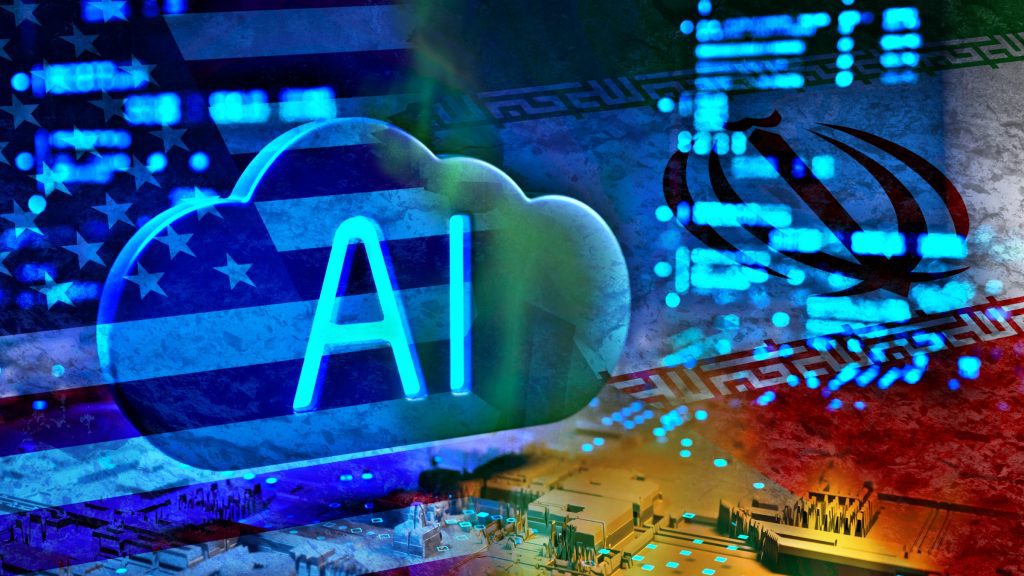
The war between the US, Israel, and Iran is shapeshifting into becoming a stress test for the global digital economy, as the militarization of AI and the Strait of Hormuz’s closure threaten to derail the international cloud infrastructure and data center operations.
Despite generating breaking profits for Wall Street banks and weapons manufacturers, the shutdown of Qatari helium exports and the transformation of Gulf data centers into military targets have altered the games, with players of the global stage fearing a systemic AI famine.
According to Al Jazeera, we are witnessing the “first AI war” in a new form, that is no longer confined to regional borders but spilling over into supply chains, demanding a radical reassessment of the geographical vulnerabilities inherent in the once-borderless digital cloud.
The war, once viewed through the lens of oil and geopolitics, has changed into a multidimensional crisis where technology, energy, and security interact. Gulf nations, long placing themselves as future hubs for cloud economy computing and AI, now face a sharp reality, digital infrastructure is no longer neutral.
Data center operations, semiconductor supply chains, and even the concept of a borderless cloud are proving deeply vulnerable to geopolitical shocks.
When War Hits the Cloud
The war has exposed how weak the digital backbone of the global economy truly is. What was once considered a decentralized and resilient “cloud” is now tied to physical geography, energy flows, and political stability. Disruptions across the Gulf specifically in Qatar have rippled through global supply chains, affecting everything from semiconductors to helium an essential component in chip manufacturing.
According to international analyses, the closure of the Strait of Hormuz triggered widespread energy disruptions, directly impacting semiconductor production. Facilities in Qatar’s Ras Laffan, responsible for roughly one-third of global helium supply, were forced offline, results in high costs and straining data center operations worldwide.
As a result, infrastructure once seen as a safe economic asset has become a strategic liability, with some digital facilities reportedly targeted during the war.
The broader economic toll is being reflected now as events are rolling out.
The International Monetary Fund downgraded its global growth forecast for 2026 from 3.3% to 3.1%, warning that a prolonged conflict could push it down to 2.5%. Energy exports remain constrained, global shipping is under pressure, and inflation is rising as supply chains fracture.
Yet, even as the macroeconomic outlook darkens, parts of the tech ecosystem particularly AI continue to show resilience.
“Despite the shocks from the Iran war, we’re still seeing resilience in a lot of sectors like artificial intelligence and renewable energy,” said lead analyst for global trade at the Economist Intelligence Unit, Nick Marro.
Warfare’s AI Battlefield
Beyond economics, war marks a turning point in how wars are fought. While some have labeled it “the first AI war,” analysts argue it is instead a new phase in an ongoing transformation. From Ukraine to Gaza and now Iran, AI has steadily moved from AI support tools to a central component of military strategy.
Modern warfare no longer begins with missiles plainly, but the story has more to it. Rather, it begins with dismantling the enemy’s ability to see, communicate, and decide. Cyber operations, electronic warfare, and AI driven intelligence now form the opening moves, targeting networks and data center operation systems before physical strikes occur.
In the US-Iran war, AI systems processed vast datasets from satellite imagery to signals intelligence enabling rapid target identification and prioritization. This compression of decision making time has dramatically accelerated the pace of war.
Operations that once required days of human analysis can now be executed in minutes, with reports indicating that around 1,000 targets were struck within the first 24 hours, as a result of technology and war.
However, this speed comes with risks, this is another result of technology and war.
The deadly strike on a school in Minab, reportedly based on outdated data, shows the dangers of relying on automated systems. Analysts also point to “automation bias,” where human operators, given only seconds to respond, tend to approve AI generated decisions without sufficient scrutiny.
The implications extend far beyond the AI battlefield.
Data center operations, cloud systems, and digital infrastructure are no longer peripheral assets, they are now primary targets. This shift signals that future wars will not only be fought on land, sea, and air, but across servers, networks, and data flows.
For Gulf countries such as Kuwait, the chances are particularly high. Their ambitions to create advanced digital economies now collide with a volatile security environment, where investment in AI and data infrastructure carries both opportunity and risk.
After everything is considered, war shows a deeper transformation, AI is no longer just an economic driver but part of a geopolitical equation. Success in this new era will depend not only on investment and innovation, but on the ability to navigate a world where technology and war are increasingly inseparable.
Inside Telecom provides you with an extensive list of content covering all aspects of the tech industry. Keep an eye on our Intelligent Tech sections to stay informed and up-to-date with our daily articles.
