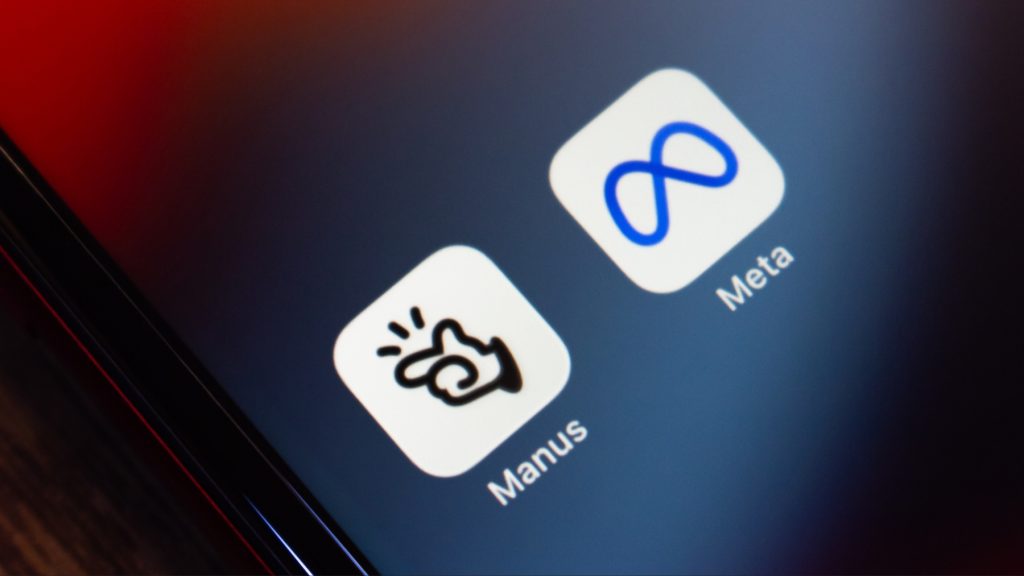
On June 1, China’s State Council and National Development and Reform Commission introduced new regulations, effective July 1, to formally block and unwind foreign tech deals, directly targeting Meta’s recent $2 billion acquisition of Manus, in a China overseas investment shift.
Beijing now controls its homegrown technology, impacting future China overseas direct investment strategies. By declaring such jurisdiction, the country’s regulators are setting up a national security boundary to prevent valuable intellectual property and engineering talent from migrating to US corporations.
The crackdown would hold disruptive powers over the global tech industry, transforming corporate acquisitions into high-stakes geopolitical standoffs.
Crackdown on China-Shedding
The primary target of these new measures is a practice regulators call “Singapore-washing” or “China-shedding,” where domestic tech firms relocate operations and staff to the city-state to bypass Beijing’s strict oversight and court American capital.
It has completely reshaped the landscape for Chinese outbound direct investment, forcing companies to reconsider how they structure international growth.
Manus AI startup, founded by Chinese engineers in Wuhan, did exactly that by moving to Singapore before being acquired by Meta. Under the newly tightened China cross border data transfer rules, cross-border talent transfers, technical training, and remote guidance in sensitive sectors like AI are strictly banned without explicit government approval.
The restrictions have already become a reality for Manus’s CEO Xiao Hong and chief scientist Ji Yichao, who were forbidden from leaving China as part of an export control analysis. This case represents a dramatic evolution in how China national security foreign investment policies are enforced beyond borders.
The nature of the law has left analysts wondering how Beijing intends to enforce a law against a company already integrated into Meta’s Singapore offices.
“The transaction complied fully with applicable law,” said Meta spokesman, Andy Stone.
However, experts note that legal technicalities matter very little when a state can apply pressure on employees’ families or assets left within mainland borders, fundamentally changing the risk calculation for China ODI (outbound direct investment) moving forward.
“If an authoritarian state is threatening your family, it doesn’t really matter what the law says,” Chris McGuire, a senior fellow at the Council on Foreign Relations said.
“If you’re going to tie yourself to the Chinese AI ecosystem, you have to accept that there is no predictability. The Chinese government will always get its way.”
China Overseas Investment and Tech Suppression
The rules introduce heavy powers, beyond halting the emigration of talent, which allows Beijing to legally ban foreign corporations from trading with China if their home countries restrict Chinese investments.
If Washington sanctions a Chinese company, Beijing can now retaliate by blocking an unrelated US acquisition of a Chinese-linked entity.
These updates to China merger and acquisition regulations mean non-compliance risks forced asset selloffs and heavy fines, leaving future China ODI pipelines highly vulnerable to political disputes.
“I think it’s quite clear now that AI is treated by Beijing regulators much more like critical infrastructure rather than commercial technology,” said Lizzi Lee, a fellow at the Asia Society Policy Institute’s Center for China Analysis.
This stance will heavily restrict any future tech merger and acquisition in China involving high-level machine learning. The regulatory tightening arrives at a shaky moment in US-China relations.
The White House recently accused Chinese entities of running “deliberate, industrial-scale campaigns” to “extract capabilities” from US AI models. The timing is critical, as a high-profile summit in Beijing next month will bring US tech titans, including Nvidia’s Jensen Huang, Apple’s Tim Cook, and Tesla’s Elon Musk, alongside political leaders to discuss trade barriers and AI stability.
Jensen Huang, whose company once held a 95% market share in China, saw that dominance fall to zero following successive waves of US export controls and Beijing’s retaliatory security probes into its custom-built H20 chips. In response, Chinese firms DeepSeek, ByteDance, and Alibaba are rapidly designing built-in-China chip clusters, such as Huawei’s ‘Ascend,’ to bypass American hardware.
While some analysts doubt the Manus disagreement will top the summit’s agenda, the message from Beijing regarding China overseas investment is obvious. Global funds must now realize that any Chinese outbound direct investment can be pulled back at a moment’s notice.
By weaponizing its export control legal toolkit and restricting China overseas direct investment, the country is moving to protect its supply chain dominance, blunt Western trade pressures, and achieve total self-reliance.
Ultimately, these aggressive changes to China overseas investment policy prove that Beijing will protect its sovereignty over China ODI at all costs. By that, strengthening a permanent freeze on unrestricted global foreign investment.
Inside Telecom provides you with an extensive list of content covering all aspects of the tech industry. Keep an eye on our Tech sections to stay informed and up-to-date with our daily articles.
