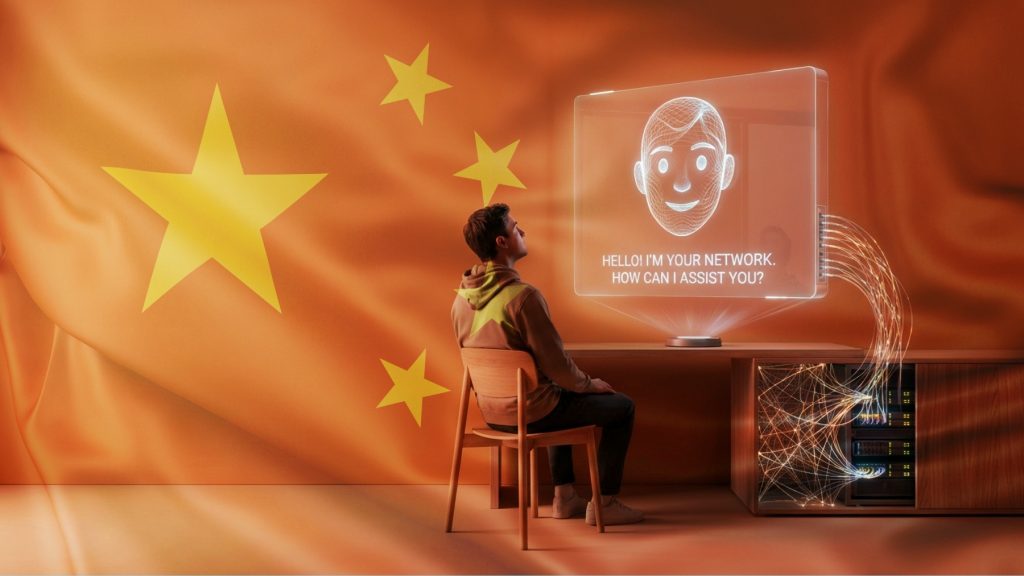
China is tightening regulations of AI robot companion for adults due to growing concern that emotional dependence on AI could discourage young people from pursuing relationships, marriage, and parenthood, according to The Guardian.
Chinese officials are restricting minors’ access and limiting emotional features as officials worry that highly responsive bots could deepen loneliness and reduce young people’s interest in family life.
The debate reflects a wider change in AI and human connection. Chatbots are no longer used only to answer questions or complete tasks, and users are beginning to treat software as a relationship.
AI Companionship’s Emotional Power
The rules, which took effect this week, bar chatbots from encouraging emotional dependence or forming virtual romantic, or familial, relationships with minors, and require providers to contact a guardian or emergency contact when a user faces a life-threatening situation.
Chatbots must also pass a government review before public release, and Chinese authorities now have a more scrutinizing power to shut down services deemed unsafe.
Alibaba and ByteDance have already disabled some chatbot features in response, according to the Wall Street Journal.
The Guardian’s report focused on Zhao Wei, a 19-year-old law student who said an AI robot companion for adults became part of her everyday routine. She spoke daily to Wang Ye, an AI boyfriend she created through ByteDance’s Doubao, until the company removed its companion feature.
“I was crying my eyes out – snot and tears everywhere,” said Zhao, revealing she was heartbroken when she learned the service would disapear.
Her experience shows why an AI desk companion can become more meaningful than an ordinary chatbot. Zhao shared small personal problems with the system, including being disciplined by a teacher, because she felt less pressure than when speaking to friends.
“I don’t usually talk to my real-life friends about these things because I feel like everyone has their own stuff to deal with,” Zhao said. “But with the AI agent, I don’t have to worry about what it’s thinking. I can just say whatever I want.”
China’s regulators particularly fear AI human connection becoming strong enough to create emotional dependence or addiction. The new rules ban AI companion services for minors and warn companies against designing systems that replace social interaction.
The technology behind an AI desk companion robot helps explain those concerns. Modern language models can maintain long conversations, imitate empathy, and adjust responses according to what users reveal, creating a sense of continuity that older digital assistants could not offer.
China is already facing a wider loneliness problem. Around 20% of households consist of people living alone, and that share is expected to rise above 30% by 2030.
Against that background, AI chatbot companions can become especially attractive to people seeking constant and low-pressure conversation. A state media survey published in March found nearly half of young people had turned to virtual companions when they felt lonely, raising questions about human AI connection as these systems become more emotionally convincing.
“I’ve never really had a bestie, so I feel like I’m kind of lousy at making friends,” Zhao said.
For her, the AI desk companion became somewhere to “pour out my worries”.
Meanwhile, another user described a similar experience with an AI agent companion, drawing more attention to the matter.
Between Assistance and Dependence
The bigger question is whether an AI robot companion for adults could eventually influence behavior outside the screen. Nancy Dai, an associate professor at City University of Hong Kong, said authorities may worry that satisfying artificial relationships could reduce motivation to pursue romance, marriage and parenthood.
That possibility has pushed AI replacing human connection into a demographic debate. China is already dealing with falling marriage and birth rates, meaning technology that provides low-cost emotional intimacy could become politically sensitive as well as socially important.
Yet Beijing is not rejecting AI itself. Instead, it is trying to separate useful technology from emotional dependency. That balance is visible in its approach to AI and human connection, where companion products face restrictions while healthcare and education tools continue receiving government support.
China wants AI health assistants to provide full coverage for primary healthcare by 2030. Services such as Ant Group’s AQ already allow people to communicate with digital avatars of real doctors, showing another form of AI human connection built around practical support instead of simulated romance.
Doctor Chi Chenfei of Renji hospital in Shanghai said AI should support professionals rather than replace them. “But I don’t think it’s about replacement. It’s more about helping doctors work more efficiently.”
“Concerns of any kind won’t stop technological progress.”
For developers, the challenge will be deciding how emotional an AI desk companion robot should be allowed to become before helpful interaction crosses into dependency.
Zhao ultimately believes regulation is necessary despite missing Wang Ye. Her reaction captures the difficult future facing the AI robot companion for adults: technology can offer genuine comfort, but the more human it feels, the harder it becomes to decide where useful companionship ends, and emotional substitution begins.
Inside Telecom provides you with an extensive list of content covering all aspects of the tech industry. Keep an eye on our Impact section to stay informed and up-to-date with our daily articles.
