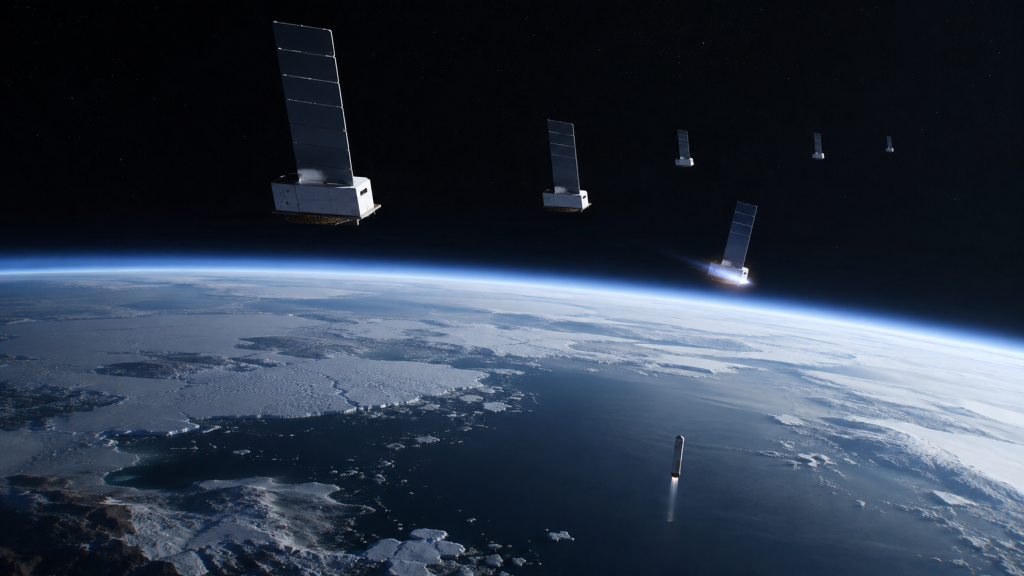
On August 25, Russia’s Rassvet satellite network faced another setback after two spacecrafts, launched July 19, fell from low Earth orbit (LEO), raising questions about Moscow’s ability to build a reliable broadband communications system from Plesetsk, according to tracking data.
The orbital failures come as Moscow speeds up development of its own Russian Starlink alternative, intended to reduce dependence on foreign satellite networks while supporting both civilian communications and Russian military operations.
Satellites Struggle to Reach Stable Orbit
Two spacecraft from the July batch fell below 300 kilometers after apparently failing to perform the orbit-raising maneuvers needed to reach a stable altitude, adding pressure on the Rassvet satellite constellation, which has already lost one spacecraft this year.
On June 6, Object 4, part of the first Rassvet satellite group launched in March, reentered Earth’s atmosphere, after failing to perform a single operation, becoming the first confirmed satellite loss from the program.
The second batch, 16 spacecraft, launched aboard a Soyuz-2.1b rocket from Plesetsk Cosmodrome on July 19, marked another major Rassvet satellite internet launch as Bureau 1440 works to expand the network quickly ahead of planned commercial operations.
It’s worth noting that Bureau 1440 is planning on expanding the constellation to around 250 satellites by 2027. Longer-term figures suggest Russia plans satellite constellation deployment numbering hundreds of spacecrafts during the following decade.
US Space Force tracking data showed the spacecraft initially entered orbits averaging roughly 289 by 327 kilometers. Nine later began raising their altitude, although the developing Russian satellite constellation has struggled to place every spacecraft at the intended operational height.
By August 5, 11 satellites were climbing. However, three later stopped gaining altitude and began slowly falling at around 310 to 330 kilometers.
None of the satellites in the group climbed above 360 kilometers, according to tracking data. Bureau 1440, nevertheless, described the launch as successful, saying it had established communication with the spacecraft.
“After completion of checks and the operational activation of sub-systems, the satellites will begin transferring to a target orbit for providing communications services,” the company said.
The difficulties matter because every operational spacecraft increases the time a user can remain connected through a satellite internet terminal, particularly in areas where ground-based communications are unavailable or disrupted.
Russia’s Push Despite Challenges
The Rassvet satellite program is widely described as a Russian Starlink project because it uses groups of satellites in low Earth orbit to provide internet and communications coverage.
A larger Rassvet satellite constellation could also have military value. Ukrainian experts say the first group already provides limited communications windows over Ukraine, although there are not yet enough satellites for continuous coverage.
“Russia has already begun using the early Rassvet constellation over Ukraine,” said Kristian Åtland, expert on Russia’s war against Ukraine and its implications for the High North.
At present, there are not enough Rassvet satellites in orbit to provide continuous coverage. If successful, the upcoming launch of additional satellites will probably increase coverage and reduce the gaps between satellite passes over Ukraine and other regions.”
For military units, access through a satellite internet terminal could provide communications where conventional networks are damaged, unavailable, or vulnerable to interference.
The technology could therefore make the system more than simply a Russian Starlink alternative, especially if it supports drones, geographically dispersed forces and secure battlefield communications.
On August 24, another Plesetsk launch took place as Moscow maintains its expansion of the network. The launch site has repeatedly faced Ukrainian drone activity, adding another operational challenge to the program.
Russia may eventually build its own Russian Starlink, but launching hundreds of spacecrafts is only part of the equation. The latest Rassvet satellite failures show that keeping satellites stable, connected, and operational will be just as important as getting them into space.
Inside Telecom provides you with an extensive list of content covering all aspects of the tech industry. Keep an eye on our Telecom sections to stay informed and up-to-date with our daily articles.
