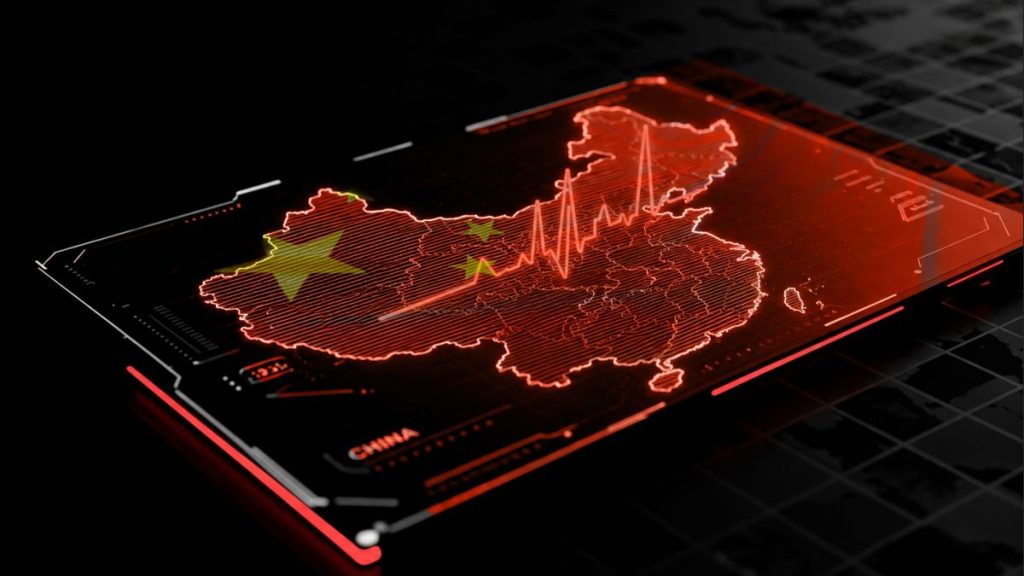
Speaking at the annual Lujiazui Forum in Shanghai 2026 on June 17, CSRC Chairman Wu Qing, warned that the state will “strictly investigate and punish” illicit trading maneuvers, targeting listed companies that exaggerate their AI capabilities simply to inflate market valuations. Beijing is tightening its grip on AI linked China AI stocks speculation.
While Beijing is actively underwriting a multi-billion-dollar sovereign tech ecosystem, officially expanding its flexible STAR Market fifth listing standards to give unprofitable frontier AI large-model and embodied intelligence startups access to fresh public capital.
Chairman of the China Securities Regulatory Commission (CSRC), Wu Qing, said regulators will “strictly investigate and punish” illicit activities such as riding hot technology themes to hype the China AI stock market concepts, market manipulation, and insider trading.
Regulators are moving with urgent velocity to prevent opportunistic corporate storytelling from mutating into systemic capital market instability.
The China Securities Regulatory Commission (CSRC) launched a regulatory intervention to purge speculative asset bubbles from its technology sector, even as global institutional funds flood mainland equities in search of cheaper, high-growth alternatives to Wall Street’s tech titans.
Beijing is warning companies and investors exploiting technology themes to inflate valuations will face punishment, as global funds increasingly view Chinese AI shares as cheaper alternatives to US tech giants.
China AI stock market wants an AI boom, but not an AI bubble. The Chairman’s comments on China AI stock, delivered at the annual Lujiazui Forum, point to a deeper tension in China’s capital markets.
On one side, Beijing is backing AI with policy support, funding incentives and a push to build a technology ecosystem less dependent on Washington. On the other, officials worry that the same enthusiasm regarding the China AI stock is being used to fuel speculative trading, inflated corporate narratives and possible market abuse.
A Rally Beijing Does Not Fully Trust
The concern has grown as China’s CSI AI index, which tracks companies across the AI supply chain, has jumped nearly 30% this year, far outpacing the roughly 6% gain in the broader CSI 300 index.
State media has also reported that executives and major shareholders at mainland-listed chipmakers have rushed to sell shares, taking advantage of the China AI stocks rally to cash in.
That has alarmed regulators who remember previous waves of speculative storytelling in sectors such as commercial spaceflight and the low-altitude economy. Companies with limited real exposure to AI have tried to attach themselves to the theme, hoping the label alone can lift share prices.
The CSRC is now preparing guidance on the use of AI in capital markets, targeting illegal use of tools to generate stock recommendations, spread rumors or enable improper trading. Senior economist at the Economist Intelligence Unit, Tianchen Xu, said the use of AI tools in trading has remained a regulatory blind spot.
“Beijing is increasingly concerned about AI-related financial risks — from deepfake videos using public figures to promote stocks, to listed companies exaggerating their ‘AI story’ to inflate valuations,” said partner and chair of the digital practice at The Asia Group, George Chen.
Cheap China AI Stocks, Costly Risks
Yet the crackdown comes as cheap China AI company stock linked businesses are drawing attention because they look less expensive than their US peers. While Wall Street has pushed valuations of major technology names higher, several large Chinese companies investing heavily in AI still trade at lower earnings or revenue multiples.
“This is an attractive opportunity,” Eva Lee, head of Greater China equities at UBS, said in a recent note, adding that top AI companies are at “historically low valuations.”
Alibaba illustrates the cheap China AI company stock divide.
The company has integrated its Qwen AI model into e-commerce platforms, pledged $50 billion for cloud infrastructure and is designing its own AI chips, moves that have helped support the China AI stock price narrative. It trades at a forward price-to-earnings ratio of about 17, compared with Amazon’s 27. “We view Alibaba as a global AI winner,” Morgan Stanley wrote.
But the discount reflects more than investor neglect in China AI stocks. China’s economy remains weak, many businesses are tied to the domestic market and geopolitical barriers are rising. The Pentagon recently added Alibaba and other Chinese companies to a list of businesses it says work with Beijing’s military, a designation the companies reject.
For investors, China AI stocks sector presents a paradox, it offers cheaper entry into the global AI race, but comes with tighter oversight, limited overseas access and political risk. Beijing is not rejecting AI enthusiasm, but more like trying to control it before optimism becomes instability.
Inside Telecom provides you with an extensive list of content covering all aspects of the tech industry. Keep an eye on our Intelligent Tech sections to stay informed and up-to-date with our daily articles.