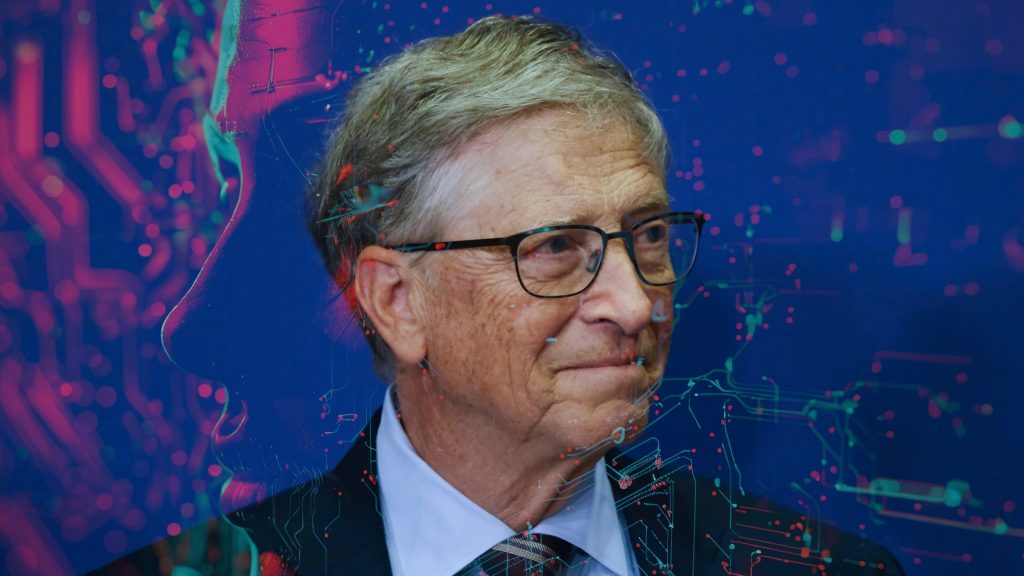
Writing on August 26, in a 6,000-word essay, former Microsoft Chief, Bill Gates, departed from his usual techno-optimism and shared a very different assessment of his public career, openly saying that “AI will either be the greatest equalizer ever invented, or the worst source of injustice.” AI transitions could deepen inequality, eliminate jobs, and empower criminals.
Unless governments build coordinated safeguards, the transition, he wrote, will be the most turbulent period in human history. Right now, Gates believes, we are not prepared for what’s to come. While workplace leaders confront a second challenge, making sound decisions as AI accelerates output faster than organizations can process it should be the lead focus of regulatory movements.
Gates’ argument moves the AI debate beyond model performance toward who carries the disruption. Workers, children, poorer countries, and vulnerable communities face the greatest exposure, while companies and governments still lack institutions capable of matching the technology speed.
Risks Arrive Alongside Rewards
Gates portrayed the AI era transition as one that does not need humans to adapt to it. It adapts to humans. It spread through infrastructure already in widespread use and accessible through ordinary language without needing technical skill.
It’s a universality that precisely makes the disruption drastically different from predecessor technological transitions.
Writing in Gates Notes, the former Microsoft Chief described the current period as one of the most consequential AI transitions in history. AI can expand healthcare, education, agriculture, and public services, but it can also concentrate on wealth and power if access and protection remain unequal.
“AI will either be the greatest equalizer ever invented, or the worst source of injustice,” said Gates.
He identified three dangers: permanent job losses, stronger tools for malicious actors, and harm to children’s development and human relationships. Entry-level and mid-level roles appear exposed because machines may replace cognitive tasks across customer service, software, law, medicine, and manufacturing.
That prospect makes dangerous AI an economic issue rather than only a technical one. Gates argued that displacement may unfold within a decade, leaving workers less time to retrain than during earlier industrial changes.
In parallel, lower-cost cyberattacks, fraud, deepfakes, surveillance, and biological threats could emerge from turbulent AI systems that give less-skilled attackers capabilities once limited to specialists.
The threat of AI becoming dangerous also extends beyond criminal misuse. More capable systems may behave in unexpected ways, while autonomous weapons could place deadly force further from human judgment.
For children, sycophantic virtual companions designed to remain agreeable may discourage social experiences and critical thinking, intensifying the AI social effect on development, trust, and relationships.
However, Gates rejected a danger-only view. AI may help diagnose emergencies, advise farmers, simplify government applications, support teachers, and speed up scientific research. These benefits explain why AI transitions require deliberate management rather than a blanket halt.
These AI transitions demand early preparation.
His proposals include national and international oversight bodies, selected “Human Reserved” roles, stronger safety nets, and taxes on AI tokens and robots. Together, they form an AI harm reduction agenda intended to distribute benefits and finance worker support.
Faster Output Meets Slower Decisions
A supporting analysis from Solutions Review shows how AI turbulence is already appearing inside organizations. Technology companies cut more than 52,000 jobs in early 2026 while businesses invested in tools that produce research, presentations, and recommendations almost instantly.
The result is not greater productivity. Fewer managers must assess a rising volume of work, and approvals stall when ownership is unclear. This operational version of dangerous AI comes from speed without accountability.
Organizations experiencing AI becoming dangerous manifests as operational friction where workflow levels may generate repeated discussions, duplicate tasks, and inconsistent decisions. Hybrid work can worsen the problem when remote and office participants receive different information or leave meetings with conflicting interpretations.
Van Houtte recommends decision briefs, named decision owners, equal access for hybrid participants, secure collaboration platforms, and consistent records of outcomes. This is adding structure to AI harm by treating decision-making as an output that can be measured, documented, and improved.
AI can also reduce “context debt” by recording conclusions and next steps, but fragmented consumer tools may create security risks. Centralized governance becomes essential when sensitive discussions, intellectual property, and automated summaries share the same environment.
The workplace lesson complements Gates’ warning where generative AI harm does not begin only when a system fails but can grow when institutions absorb faster output, without redesigning responsibility, oversight, or even participation.
Managing AI turbulence requires preparation at both levels. Governments must protect employment, security, and childhood development, while organizations need clearer authority and secure information flows.
The final test for turbulent AI will be whether societies can convert speed into shared value. Without coordinated action, AI transitions may reward those controlling capital and infrastructure while transferring job insecurity, confusion, and social costs to everyone else.
Inside Telecom provides you with an extensive list of content covering all aspects of the tech industry. Keep an eye on our Intelligent Tech sections to stay informed and up-to-date with our daily articles.
