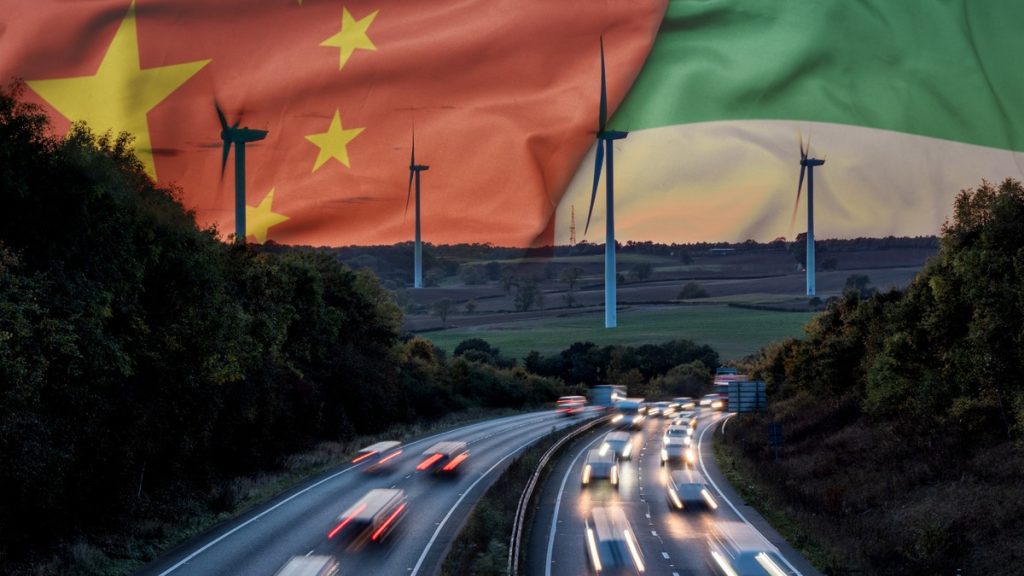
Day by day, Abu Dhabi is moving closer to China to grow green energy, Electric Vehicles (EV), batteries and AI power projects, opening new markets for future Emirates China collaborations with an undertone of pressure on Saudi Arabia’s Vision 2030 plans to lead the Gulf’s clean transition from oil GDP to a technologically driven economy.
The cementing of China UAE relations is seen in the green race that’s no longer only about solar plants or EVs, but about who can bring technology, logistics and policy support together fastest, and China is now central to that race.
Chinese technology can help Abu Dhabi scale clean energy, storage, robotics and electric transport, while giving the companies a stronger UAE and Middle East base, making the UAE and China relationship even stronger.
The competition between Abu Dhabi and Riyadh has historically expressed itself in architecture, in airline routes, in the accumulation of sovereign wealth and global cultural institutions. It has now found a new theater in the EV charging station.
The UAE has held its position as the Middle East’s leading EV market for the second consecutive year, with Chinese automotive manufacturers commanding twenty percent of local sales. It’s a penetration achieved through the kind of infrastructure lock-in that tends to outlast any individual transaction. Battery-swapping networks, ultra-fast charging architectures, long-term industrial assembly agreements.
The Chinese presence in Abu Dhabi’s green mobility ecosystem is no longer a commercial relationship, but load bearing.
Abu Dhabi Looks to China to Scale Green Technology
China UAE relations are speeding its plan to tap into Beijing’s tech, from renewable energy and electric vehicles to robotics, to pursue a greener economy. Chairman of the Abu Dhabi Department of Energy, Abdulla Humaid Al-Jarwan, said his department was in talks with 22 Chinese companies, including Contemporary Amperex Technology Co., Limited (CATL), during a visit to Shanghai.
“What we have seen here is amazing,” Al-Jarwan said, adding, “they are ready to develop the right solution for Abu Dhabi, and this is what we want to achieve.”
His comments show that Emirates China relationship is not only buying technology. It’s trying to build a deeper industrial link with Beijing. Al Jarwan said Abu Dhabi authorities would provide logistics and policy support to Chinese companies to speed construction, as energy demand rises with AI and data centers.
One example was the achievement of an ultra-fast EV charging station in Abu Dhabi in six weeks, a sign of the China UAE relations in the speed of production. That UAE China mix could help Abu Dhabi move faster in solar power, batteries and charging infrastructure.
Al Jarwan said Abu Dhabi plans to add at least 3 gigawatts of solar power every year. This creates demand for Chinese clean energy services. China dominates energy storage systems, with Chinese companies above 80% of the global market. For Abu Dhabi, this matters because AI computing and data centers need stable power, as stable as the Emirates China collaboration now.
“China’s industrial transformation under the dual carbon goals reflects many of the same opportunities and challenges we are addressing in Abu Dhabi,” Al Jarwan said. “The opportunity before us is significant. And the pace of change demands urgency.”
The UAE is a leading Middle East market for electric vehicles. The UAE accounted for around 50% of all EV sales across the region. This reflects the demand China cars in UAE, charging work and a national EV policy introduced in 2023. That policy aims to speed EV adoption, expand charging networks and clean transport.
Chinese EV brands are becoming more visible today in Dubai and Abu Dhabi. BYD, Nio, Geely, MG and Chery are gaining space in a market once led by Japanese cars and then Tesla. UAE China trade lead to the expansion of automakers in the UAE market share to an estimated 15 to 20% in 2025.
UAE China Role Adds Pressure on Saudi Vision 2030
For Saudi Arabia, whose Vision 2030 blueprint already staked considerable prestige on the ambition to develop domestic manufacturing capacity rather than simply import the finished products of someone else’s industrial revolution, the Abu Dhabi-Beijing axis is a specific and compounding problem.
Saudi Arabia has long used Vision 2030 to diversify its economy beyond oil, develop renewable energy, build industries, attract investment and move toward a low-carbon economy. China has aligned much of its Saudi strategy with this plan.
The Saudi China relationship has moved from oil trade to a broad strategic partnership, along with the pressure that has come from the UAE China trade.
Trade reached nearly $105 billion in 2022 in comparison with $417 million in 1990. Since Vision 2030 was launched in 2016, China has supported Saudi goals in energy, infrastructure, technology, tourism and clean industry. Saudi Arabia plans to produce 50% of its electricity from renewable sources by 2030. It has also planned 58.7GW of renewable energy capacity by 2030. Chinese companies have worked on solar, wind, turbines and photovoltaic manufacturing projects.
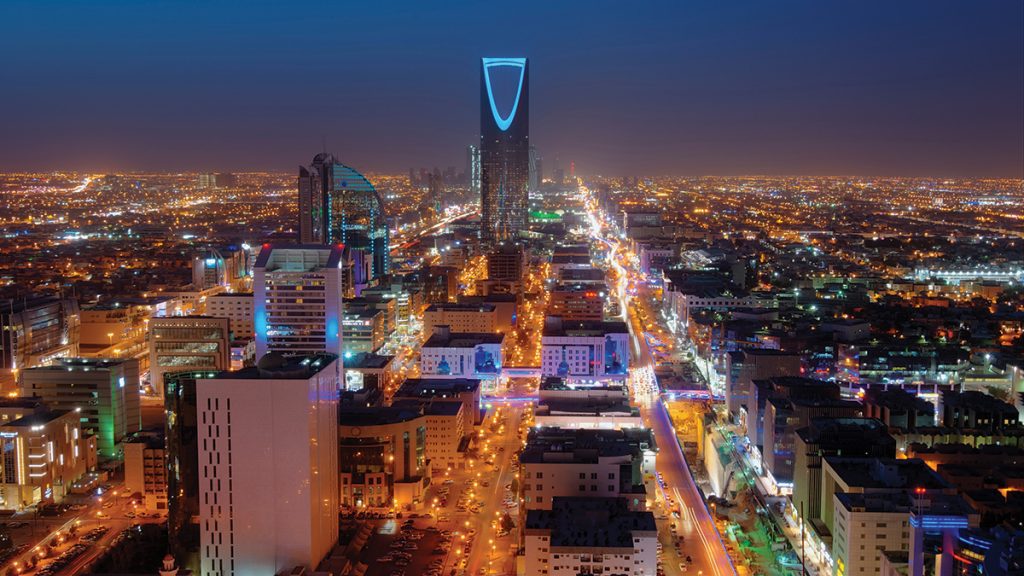
In July 2024, Jinko Solar and TCL Zhonghuan signed agreements with Saudi Arabia’s Public Investment Fund and Vision Industries to build solar plants with 30GW of production capacity, valued at $3 billion.
Chinese exports and investment are also growing quickly in Saudi Arabia. Chinese exports to the kingdom were heading toward a record high, reaching $40.2 billion in the first 10 months of the year. China also became Saudi Arabia’s largest source of greenfield foreign direct investment, with $21.6 billion from 2021 to October, about a third in clean technologies.
This means Emirates China backed green push may not only grow the UAE’s clean economy. Every Chinese EV that normalizes itself on UAE roads, every charging network that becomes infrastructural rather than optional, narrows the window in which a rival domestic manufacturing ecosystem can establish itself before the market has already decided what it prefers.
It may also challenge Saudi Arabia’s regional lead. Emirates China relationship may gain as Chinese technology helps expand green projects and new markets, while Vision 2030 could face stronger Gulf competition in EVs, solar, batteries and smart infrastructure. This may speed up clean energy growth but also deepen rivalry.
The UAE China advantage currently is the effort and speed.
It can offer logistics, policy support, fast delivery, and a market already open to EVs. Saudi Arabia’s advantage is scale, Vision 2030 spending power and renewable energy targets. China can work with both, but Beijing becomes a key Gulf player.
China in UAE sustainable vision, is the end goal for Abu Dhabi as it increases its chances in winning the tech race before the bell rings in 2030.
By expanding solar power, clean transport, charging networks and energy storage, Abu Dhabi is building a greener economy that can support AI and mobility without relying only on hydrocarbons.
With the China investment in UAE this will help Abu Dhabi move faster, but the result is bigger, a Gulf clean energy race that could cut emissions and push the region toward a more sustainable future.
Inside Telecom provides you with an extensive list of content covering all aspects of the tech industry. Keep an eye on our Tech sections to stay informed and up-to-date with our daily articles.